


You supply your birth year, I respond with an overview of what was published that year—the popular/well-known titles first, then some books I’d recommend. If your year’s already been done, I’ll do an update. So far, we’ve done 29 years—between 1939 and 1992 (age range: 33 to 86).
The current census: 1992 // 1980, 1981, 1984, 1986, 1989 // 1971, 1973, 1978 // 1960, 1961, 1963, 1964, 1965, 1966, 1969 // 1950, 1951, 1952, 1954, 1955, 1956, 1958, 1959 // 1944, 1945, 1946, 1948 // 1939
Extra credit: You read one of the books (ideally one you’re unfamiliar with), then tell me what you thought. If we get enough of these, I’ll aggregate and post.
***Important Update About Footnotes:
Books with only a Wiki page are now hyperlinked in the list. I’ll footnote only those with further references/links/razor-sharp wry comments the flight deck. I’ll repeat this note in future notes for a while.
1951:
A slew of mysteries, spy books, thrillers. But the war is still on people’s minds . . .
Bestsellers/Well-Known Books/WWII:
The Cruel Sea, Nicholas Monsarrat
The latter two dominated the Bestseller List for the majority of 1951.
Four Classics from the Golden Age of Sci-fi:
Foundation, Isaac Asimov
The Illustrated Man, Ray Bradbury 1
The Puppet Masters, Robert A. Heinlein
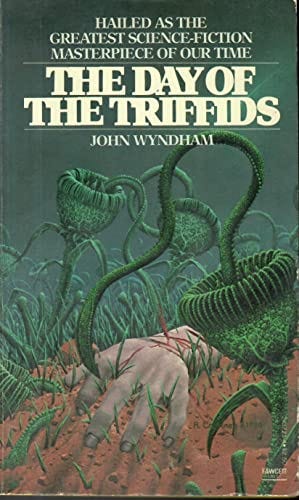
The Day of the Triffids, John Wyndham
Five Works of World Lit:
The Opposing Shore, Julien Gracq3 [France]
Pigeons on the Grass, Wolfgang Koeppen [Germany]
The Conformist, Alberto Moravia [Italy]
Memoirs of Hadrian, Marguerite Yourcenar [Belgian-born/France]
Five Other Literary Novels:
The Beetle Leg, John Hawkes5
School for Love, Olivia Manning6
Special Mention:
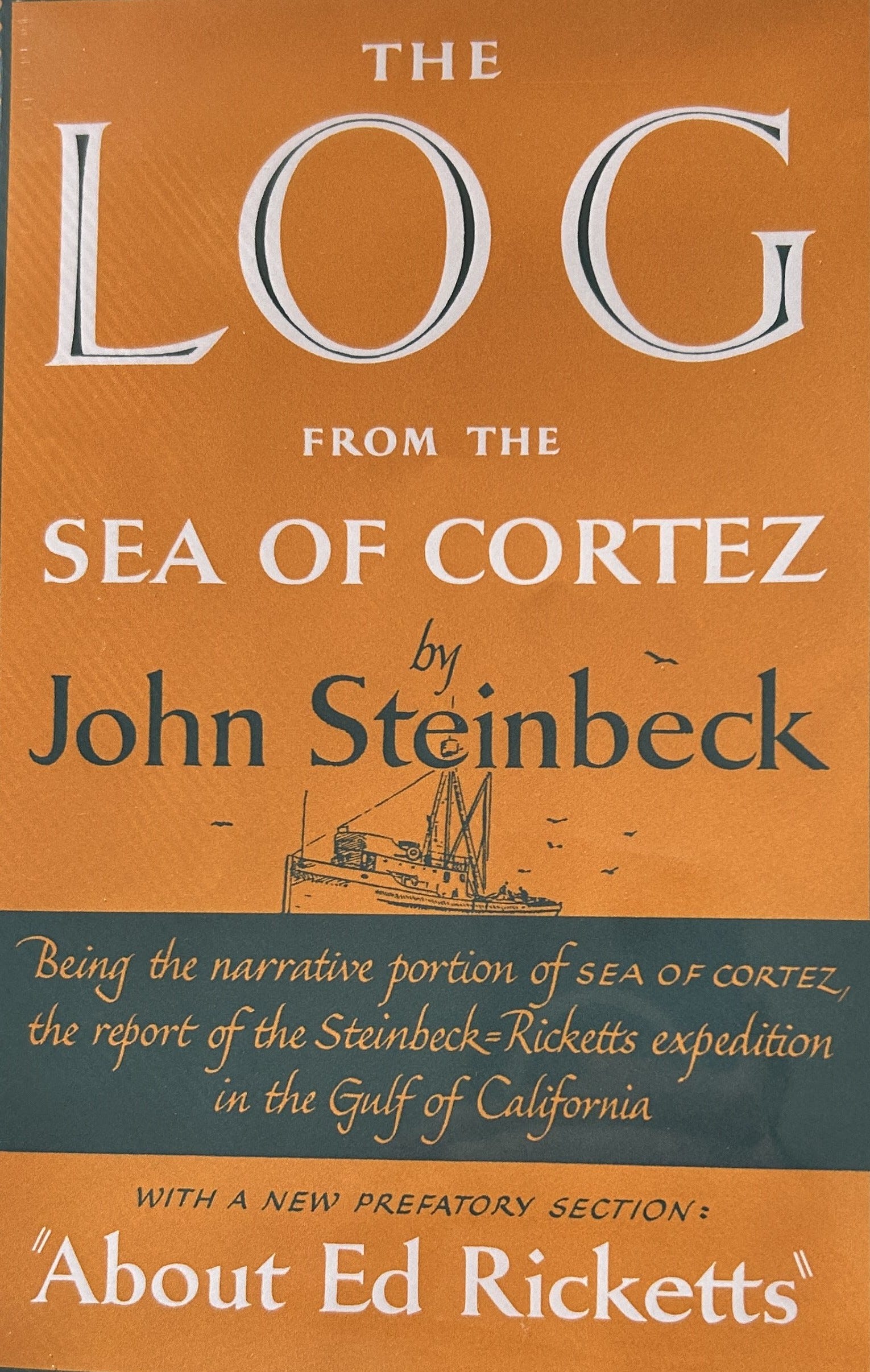
The Log from the Sea of Cortez [memoir], John Steinbeck
My List:
The Stories of F. Scott Fitzgerald, F. Scott Fitzgerald
The End of the Affair, Graham Greene
The Ballad of the Sad Café, Carson McCullers
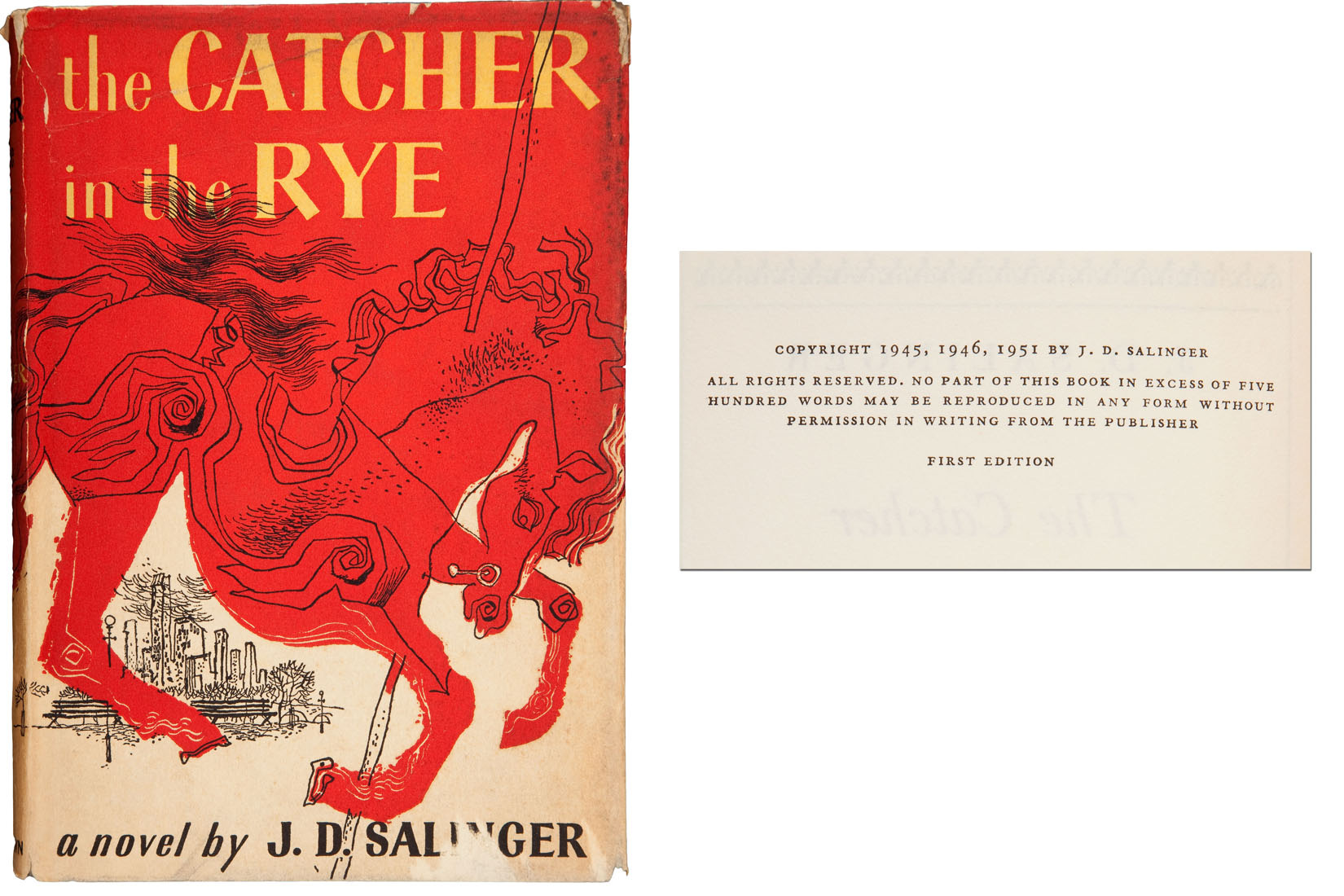
The Catcher in the Rye, J. D. Salinger
A Game of Hide and Seek, Elizabeth Taylor7
The Daughter of Time, Josephine Tey
Bradbury: Collection of stories “. . . tied together by the frame story of “The Illustrated Man”, a vagrant former member of a carnival freak show with an extensively tattooed body whom the unnamed narrator meets. The man’s tattoos, allegedly created by a time-traveling woman, are individually animated, and each tells a different tale.” [Wiki]
Cela: Original title: La colmena.
Cela was awarded the 1989 Nobel Prize in Literature.
Gracq: His most famous work. Original title: Le Rivage des Syrtes (trans. by Richard Howard). From Wiki:
The story is set at the border between two fictional Mediterranean countries, Orsenna and Farghestan, which have been at war for 300 years. It was awarded the Prix Goncourt, but Gracq refused to accept the prize as a protest against commercial compromising in world literature. The novel has been described as a “Wagnerian prelude for an unplayed opera” as it doesn’t focus on telling a story but is first and foremost concerned with creating a mysterious, out-of-time atmosphere.
Molloy: I’ve written notes on Beckett in several earlier posts. Here’s the one for Malone Dies (1951):
This is Book Two of his trilogy, the others being Molloy (1951) and The Unnamable (1953). Though an Irishman, he wrote many of his mature works in French (for its purity of expression, he said), then translated them into English. I imagine a zillion dissertations ave been written about Beckett. If he’d written nothing but Waiting For Godot (first performed 1953), he’d still be famous.
He was prolific in both theatre and prose (and poetry—who knew?). The other plays I’d recommend: Endgame (1957) and Krapp’s Last Tape (1958). His prose became highly experimental as he aged. Stripped-down, cryptic—and not just the language: Beckett tried to subtract basic elements of storytelling—he seemed to be asking how far you can go before there’s only silence left.
He led a fascinating, complex life—for instance, he worked in the French Resistance during WWII. And as a young man he was a scribe for James Joyce.
Here’s a little chunk of an essay I wrote some years ago:
“Before launching into his three linked novels . . . I thought, based on photos of his hawkish face, and abandonment of English, that Beckett would read like Sartre—that is, having the peculiar pallor of 40s and 50s Existentialism. Thus, I began Molloy with my guard up. We find the narrator at his mother’s, quite confused. How did he get there? He’s not sure. Then there’s this (we’re still on the first page):
The truth is I don’t know much. For example, my mother’s death. Was she already dead when I came? Or did she die later? I mean enough to bury.
Enough to bury?? I’m sorry, this put me in hysterics. I had him all wrong. Forget French. This was the black, self-lacerating humor of Irish pub stories, of wakes. If you don’t hear the undercurrent of fierce comedy in Beckett, he makes no sense at all.”
I recommend reading an overview of Molloy’s structure before diving in.
Hawkes: A postmodern novelist. Wrote thin, difficult-to-categorize books, often steeped in the perverse. He taught for years at Brown. I met him once in Missoula in the mid-70s, found him very urbane. Later, it came out that he’d written The Beetle Leg while living in eastern Montana, working as a tour guide at the Fork Peck dam. It’s hard to imagine anyone less likely to turn up at a spot like that.
Teaching, I often talked about his 1976 novel Travesty, a monolog delivered by the driver of a car hurtling through the French countryside toward a stone wall, delivered to his best friend and his daughter (that is, the driver’s) who’s been having an affair with the friend. Did I mention perverse? But the voice! Sometimes you have to just groove (darkly) on the daring of the experiment. Here’s how it sounds (page 1):
No, no Henri. Hands off the wheel. Please. It is too late. After all, at one hundred and forty-nine kilometers per hour on a country road in the darkest quarter of the night, surely it is obvious that your slightest effort to wrench away the wheel will pitch us into the toneless world of highway tragedy even more quickly than I have planned. And you will not believe it, but we are still accelerating. As for you Chantal, you must beware. You must obey your Papa. You must sit back in your seat and fasten your belt and stop crying. And Chantal, no more beating the driver about the shoulders or shaking his arm. Emulate Henri, my poor Chantal, and control yourself.
And a quote about his vision of fiction:
I began to write fiction on the assumption that the true enemies of the novel were plot, character, setting, and theme, and having once abandoned these familiar ways of thinking about fiction, totality of vision or structure was really all that remained.
[https://www.themodernnovel.org/americas/other-americas/usa/hawkes/]
Manning: Blurb: “Olivia Manning’s great subject is the lives of ordinary people caught up in history.”
Here’s what I wrote about Manning in a recent post on trilogies:
Manning: I’d heard the name, that’s about it. Turns out she’s one of a cadre of early to mid-20th C. women writers whose fiction has—despite its indisputable worth—dropped from sight. We still read Marguerite Duras, Patricia Highsmith, Shirley Jackson, Carson McCullers, Flannery O’Connor, Muriel Spark; a few others have been rediscovered—Zora Neale Hurston (Their Eyes Were Watching God, 1937), and Dawn Powell—The Library of America has issued nine of her novels in two volumes, including my favorites, The Locusts Have No King (1948) and The Wicked Pavilion (1954).
But this leaves a slew of estimable women novelists we don’t read. Some I’ve worked into earlier posts: Harriet Arnow, Barbara Comyns, Dorothy Canfield Fisher, Jetta Carlson, Ellen Glasgow, Theodora Keogh, Jean Stafford, Grace Stratton-Porter, Rosemary Tonks . . .
Anyway, working on this post, I discovered The Balkan Trilogy, and have been sucked into the first volume’s world this week—had one of those, Oh, she can really write moments. Manning followed this triplet with a second one, The Levant Trilogy: The Danger Tree (1977), The Battle Lost and Won (1978), and The Sum of Things (1980). The two trilogies have since been published together under the title Fortunes of War.
Elizabeth Taylor: [Not that one.] A British novelist whose work deserves to be remembered. Besides this one, I recommend: The Sleeping Beauty (1953), In a Summer Season (1963) and Mrs. Palfrey at the Claremont (1971).
I loved Catcher in the Rye when I was 14, but didn’t like it as an adult.
Just to let you know, I'm having a lot of fun with '51. A bit embarrassed, though, as I note far too many titles I've not read...I mean, I've HAD 70-some years to do so. I aim to complete by year's end!