

Remembering: Novels about Memory [2]
Part Two of a Two-Parter

I promise not to waste your time.

—from Remembering Plains series, Alyson Kinkade
[https://www.alysonkinkade.com]
Note [a]: Please click through to the Substack site (i.e. don’t read from email notification). Why? It will make me happy to know you’re seeing posts the way I put them up. And they’re best read on tablet or laptop.
Note [b]: OK, this is difficult to write: It’s come to my attention that several of you are skipping the footnotes. I know, I know, hard to believe . . . because that’s where the juicy stuff is, you know? The nuggets of back story and whatnot, the1
Part One: https://longd.substack.com/p/remembering-novels-about-memory-1
Today’s post is the second part of a look at novels having to do with memory, ones that live at the speculative (or slipstream1) end of the spectrum.
Today’s novels fall into two piles:
ones about hanging onto memories/the past
ones about getting rid of memories/the past
[But before we get to those, why not muddy the waters and ask what the folks over at the physics table think about the past? If you feel up to it, have a look at this piece from Scientific American, “Why does time flow at all? Physicists struggle to find an answer”—it’ll give you the basics of the arguments. If you’re wondering why I’m bringing this up at all, see this note.2]
5. Preserving/Re-creating the Past:
When my kids were little, video cameras were just coming out—a friend of ours bought one; he came over the day we tore down a shed and taped a few minutes. That’s it, the only moving pictures of our sons before they were men. I kind of suspect it would break my heart to watch their childhoods all over again. In any case, the inexorable slipping-away-ness of things gives life its poignancy and its terrible . . . what to call it? Sadness-because-of-how-time-is? (The Germans probably have a 32-letter word for it.) It’s no surprise how often writers who let themselves step over the boundary of ordinary reality, do it to transcend time’s limitations. There are scads of time-travel novels; we’re going to skip those (except for the first book below) because we’re already familiar with those tropes. The four novels here are more unusual versions of preserving or re-creating the past.
The Memory Collectors, Dete Meserve (2025)3
Aeon Expeditions lets clients spend an hour in their past. Four of them, strangers, meet on the same day, one of great consequence to them jointly, as it turns out. Click on the link above for more.
Time Shelter, Georgi Gospodinov (2020). Trans. from Bulgarian by Angela Rodel (2023). Winner of 2023 International Booker.
A thumbnail from Wiki:
The novel follows an unnamed narrator and Gaustine, a psychiatrist who creates a clinic for people with Alzheimer's disease in Zürich. Each floor of the clinic recreates a decade in intricate detail, aiming to transport patients back in time to revisit their memories. Tasked with collecting past artifacts for the clinic, the narrator travels across countries. Soon, healthy people turn to the clinic to flee their monotonous lives and the idea becomes widespread when more clinics open. Referendums are held across Europe to decide which past decade each country should live in, in the future.
Nobel Laureate, Olga Tokarczuk: “. . . the most exquisite kind of literature, on our perception of time and its passing, written in a masterful and totally unpredictable style."
[High on my TBR list]
Remainder, Tom McCarthy (2005)4
Guy loses his memory in a weird accident, gets a hefty settlement (with the stipulation that he never talk about the event). What’s he to do with the money? He gets a glimmer of memory, déjà vu-like . . . which sets into motion the activity that gives the novel its particular strangeness: He hires people to re-create his old building, then has them reenact sequences of seemingly trivial actions, over and over again, obsessively. Things escalate from there. The Guardian called it “splendidly odd.”
And finally:
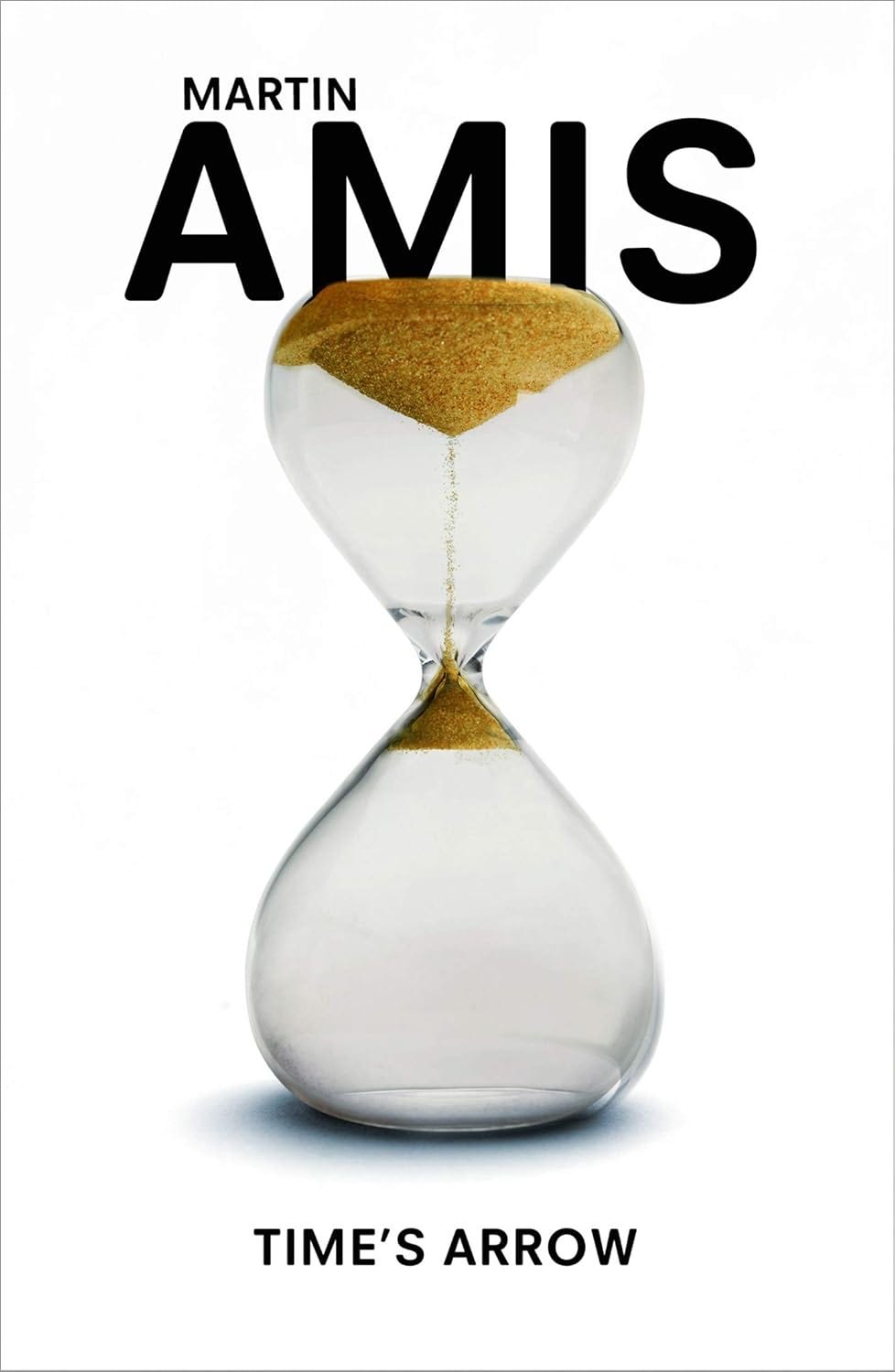
Time’s Arrow, Martin Amis (1991)
If you’ve been onboard awhile, you’ve run into earlier comments about this work. Amis, son of a famous novelist of the Britain’s Angry Young Men period, Sir Kingsley Amis, was a genuine heavyweight on his own—fifteen novels, five story collections, ten nonfiction works. An acerbic, widely known public intellectual.
I’ve never seen much praise for this novel, but it blew me away. I’m not even sure it qualifies as a “preserving the past” book—it’s more a case of the past insinuating itself into later eras, up to the “now” where the book begins. It’s among a select group of books told in reverse order [in a flash piece I remember there’s a drowning; each sentence begins with, Before that . . . the final one being, devastatingly, Before that it was an ordinary day. There’s also as Harold Pinter’s play/film Betrayal5].
But the reversal in Time’s Arrow is another kettle of fish. It’s not that scenes are shown in reverse order; all actions are reversed as if the film were running backwards. A mouth opens, food is disgorged, placed in a can, sealed, taken to a grocery. I’ll try to explain why this is more than a parlor trick of a book without spoilers. It begins with a jolt of electricity creating, within the host character, a second entity/consciousness who must now figure out what’s going on, who he’s stuck inside of, and so on. He observes, makes conclusions. For instance: A woman is crying, the host character brings his hand to her face, pulls it forcefully away, and the woman stops crying. He must be a healer! Again, you’re tempted to call this gimmickry, but there’s a rock-solid reason at the heart of this strategy. We follow along, wondering. Eventually it all falls into place—we see that reversal is the essence of the story.
6. Altering/Destroying Memory:
Before turning to our other pile, we should make a quick distinction between:
novels where someone’s memories are altered (or erased),
novels where history is altered (or erased).
In the former, memory-altering occurs within the story, to a character. In the latter, only readers are aware that the story has diverted from standard history and entered the realm of thought experiment.
The example cited most often is Philip K. Dick’s, The Man in the High Castle (1962) in which Germany and its allies win WWII and take possession of North America. My own favorite is Philip Roth’s The Plot Against America (2004)—famous aviator, Charles A. Lindbergh, the right wing/America First candidate wins the presidency in 1940, unleashing a wave of isolationism and antisemitism in America.
Four other well-regarded Alternate History novels:
The Underground Railroad, Colson Whitehead (2016)
11/22/63, Stephen King (2012)
The Small Change Trilogy, Jo Walton (2006-2008)
The Years of Rice and Salt, Kim Stanley Robinson (2002)6
Also, several lists.7
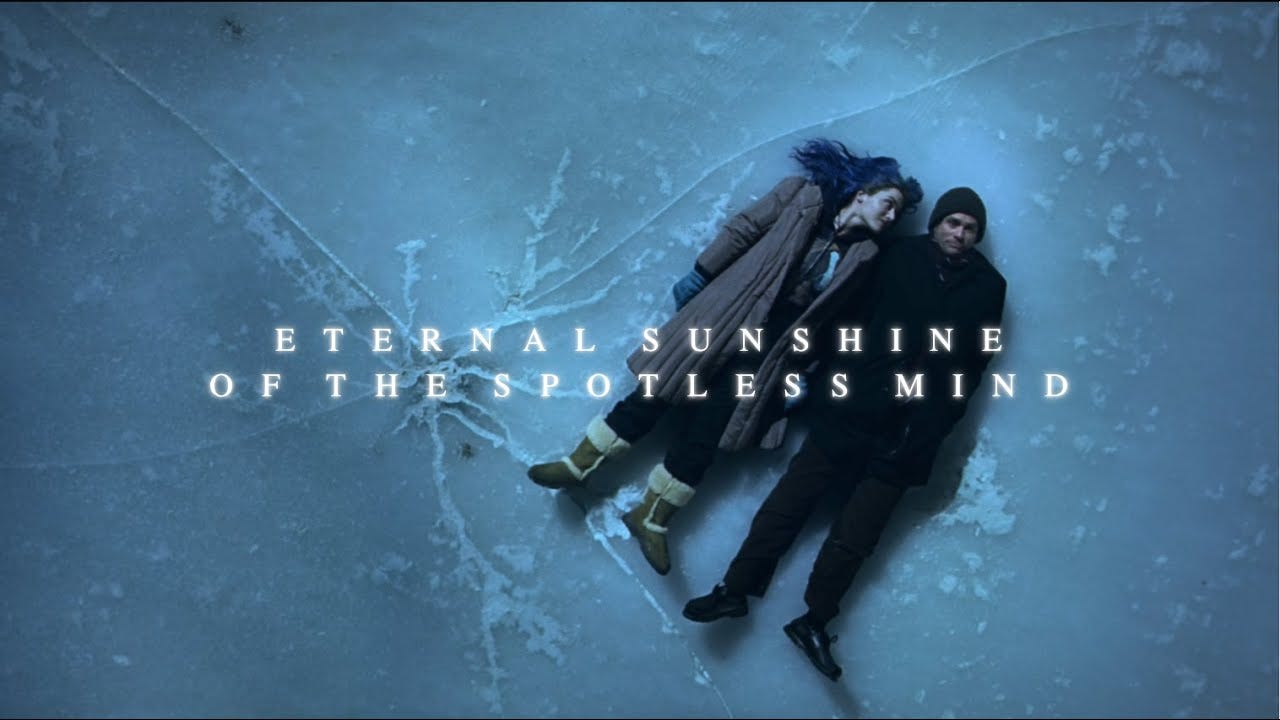
Remember The Eternal Sunshine of the Spotless Mind? Jim Carrey, Kate Winslet. Disappointed in love, people pay to have all traces of the failed relationship excised from their memory banks.8
Let’s start with this one:
. . . which shows that writers were already engaging with the idea of machines interfacing with human brains in late Victorian times. Bellamy was among the first wave of French/British sci-fi writers, between Jules Verne [Twenty-Thousand Leagues Under the Sea (1872) and H. G. Wells9 (The Time Machine (1895)]. Bellamy is much better known for his 1888 utopian novel, Looking Back. We might call this steam punk today.
Tell Me an Ending, Jo Harkin (2022).
Marketed as a thriller, but consistently praised for its writerly finesse and intellectual engagement. It was a New York Times Science Fiction Novel of 2022. New technology lets people edit or (as in Spotless Mind) erase painful memories, raising contradictions and skeins of unintended consequences. But Harkin delves more into the nature of memory itself, what it is, than you’d expect in a thriller. The language in review after review sounds like this:
“ . . . intellectually and emotionally satisfying.” [Booklist]
“Sharply, beautifully written.” [New York Times Book Review]
“Intriguing, frightening, witty, and humane.” [The Wall Street Journal]
[Here’s more from Crime Reads: “Six Books About the Perils of Memory Manipulation.”]
The Shimmering State Meredith Westgate (2021).
Memoroxin, a new Alzheimer’s therapy, becomes a go-to recreational drug among LA’s young elite. Complications ensue. A couple meet (both seeking treatment for “Mem” abuse), sense a glimmer of connection—did they know each other “before”?
From Publisher’s Weekly:
. . . a tight tale of relationships and loneliness in a city populated by people always on the hunt for the next big escape. It’s a captivating story, one that leaves readers wondering if a life scrubbed of pain and real connection is a life at all.
Recursion, Blake Crouch (2019).
Crouch is becoming known for edgy speculative thrillers. Recursion won the Goodreads Choice Award for Best Science Fiction Novel. Responding to the tendency of mainstream readers to disregard novels with paranormal elements, the New York Times reviewer wrote:
I believe they capture the disquiet of millions; they broadcast at an anxious frequency. The sense that our country’s center is not holding pulses through the novel. The fear that we are losing our collective memory, of a stable nation for instance, doesn’t read to me like fantasy.
7. Tyranny: Wiping the Public Mind
When the MAGA coup installed the current junta in the White House, we immediately saw the roll-out of two classic totalitarian tactics—both were presaged by Orwell [Animal Farm (1945), 1984 (1949)] and Bradbury [Fahrenheit 451 (1953)]:
gaslighting/re-naming
undocumenting
DEI (Diversity, Equity, Inclusion) initiatives designed to address systemic racism and bigotry were cancelled in the name of Justice (“treating everyone equally”). In public spaces (National Parks, the Smithsonian Museums, etc.) references to slavery, Black achievement, queer history, and myriad other facts inconsistent with the false narrative pushed by the regime are removed. If it’s not in the record, it never happened.
Whether we weather this perversion of historical truth is an open question. [For many current Americans there’s precious little historical knowledge to pervert.] Oh, friends, I feel a rant coming on. Much as I’d like to squirt lighter fluid on it, I’m now reminding myself that writing these posts is an exercise in mental health management.
So I’ll simply say that memory suppression initiated and enforced by the state is a special case within Remembering/Forgetting literature, one that needs more time and space than there’s room for today.
8. Addendum to Remembering [1]: Two More Amnesia Books
The Consequences of Love, Gavanndra Hodge (2020)
This one is a memoir. Hodge and her younger sister, Candy, live with dysfunctional/substance-abusing parents. Though Hodge has promised to protect Candy, she dies from a viral infection while still a child. Hodge finds she cannot remember her sister or her death; overcoming that failure becomes the center of story.
Before I Go To Sleep, S.J. Watson (2011
A bestseller. Rave reviews from major papers across the U.S. From Wiki: . . . a psychological thriller about a woman suffering from anterograde amnesia. She wakes up every day with no knowledge of who she is. The novel follows her as she tries to reconstruct her memories from a journal she has been keeping. She learns that she has been seeing a doctor who is helping her to recover her memory, that her name is Christine Lucas, that she is 47 years old and married and has a son. As her journal grows it casts doubts on the truth behind this knowledge as she determines to discover who she really is.
Note:
Apologies for relying on media sources for much of today’s post—I’ve read only a couple of these [Time’s Arrow, Recursion] so far. Will definitely read Time Shelter before summer.
Please add to both the Memory Book posts in the comments—I’ve tried to skip over the strictly genre/lit-lite examples, but you may know other good ones—I feel like we’ve just scratched the surface.
See you on 16 March.

Reminder that the Birth Year Project is still open for business:
You supply your birth year, I respond with an overview of what was published that year—the popular/well-known titles first, then some books I’d recommend. If your year’s already been done, I’ll do an update. So far, we’ve done 29 years—between 1939 and 1992 (age range: 33 to 86).
The current census: 1992 // 1989, 1986, 1984, 1981, 1980 // 1978, 1973, 1971 // 1969, 1966, 1965, 1964, 1963, 1961, 1960 // 1959, 1958, 1956, 1955, 1954, 1952, 1951, 1950 // 1948, 1946, 1945, 1944 // 1939
Extra credit: You read one of the books (ideally one you’re unfamiliar with), then tell me what you thought. If we get enough of these, I’ll aggregate and post.
Slipstream: See Reading Project [19].
By the way: Aren’t Andrea Kowch’s paintings a gas!
Physics?: I was never a science guy in school, but later I came to realize I was a materialist—a lover of stuff and a non-believer. I gradually acquired a kind of Buddhist view of things—Buddhism not as a “religion” but as a description of how the mind functions. Anyway, in mid-life I began reading physics books, now and then, ones written by practicing physicists for a general audience. If asked why, I usually say, Because I’m interested in what is. Part of the time, people know what I mean by that.
One thing I learned: that “reality” depends on scale. In our macro world, things follow the rules of cause and effect (otherwise known as Newtonian or classical physics). But at the atomic/subatomic scale, you need a different physics—quantum* mechanics. At this scale you can’t say what will happen next, only what the odds of its happening are. In short: our world/cause and effect, subatomic world/probability.
*This term quantum [plural, quanta] comes from the idea that matter is ultimately granular, that, for instance, an electron can exist only at discrete energy levels. Which means: when it changes energy levels it doesn’t migrate/flow/amble, it jumps to/materializes on the next “shelf.”
The Memory Collectors: From LitHub:
Similar idea: Toshikazu Kawaguchi has a series of short novels, Before the Coffee Gets Cold Series (beginning with a novel of that title, 2015)—a bit of the blurb:
In a small back alley of Tokyo, there is a café that has been serving carefully brewed coffee for more than one hundred years. Local legend says that this shop offers something else besides coffee--the chance to travel back in time. Over the course of one summer, four customers visit the café in the hopes of making that journey. But time travel isn’t so simple, and there are rules that must be followed. Most important, the trip can last only as long as it takes for the coffee to get cold.
Remainder: This is a novel I know I read, but remember not. Reading the description of it for this post, it sounded intriguing and I had to wonder why it had vanished from my gray matter. Well, that happens. I’m going to give it another shot.
Two of his other books, C (2010) and Satin Island (2015) were shortlisted for the Book/Man Book Prize.
Betrayal: An affair. A literary agent, his wife, and a writer. The first scene we see is the final parting of the lovers, everything at an end; the last one we see is the instant they first lock eyes at a Christmas party—they know nothing about what’s ahead of them, but we do. The poignancy is staggering. Is it a gimmick? Not if it works.
And just now I remembered The Picture of Dorian Gray (1890), which has within it, a reversal of ordinary time flow.
Kim Stanley Robinson: A master of contemporary sci-fi (and more recently, cli-fi) whose expertise extends into the science. I’m a fan of his 2020 novel, The Ministry For the Future—it has a grimly unforgettable opening, but it ultimately a hopeful book (need I say how rare a commodity that is in this genre?).
Wells: Modern readers tend to forget that Wells wrote “straight” novels (many comic) as well including:
The History of Mr. Polly (1910)
Ann Veronica (1909) [a “New Woman” novel]
Tono-Bungay (1909) [sketchy uncle, patent medicine]
Kipps (1905)
The Memory Police
"I promise not to waste your time." You never waste my time, but you do fill my reading list. Just sayin'.