


You supply your birth year, I respond with an overview of what was published that year—the popular/well-known titles first, then some books I’d recommend. If your year’s already been done, I’ll do an update. To date, we’ve done 27 years—between 1939 and 1992 (age range: 33 to 86).
The current census: 1992 // 1980, 1981, 1984, 1986, 1989 // 1971, 1973, 1978 // 1960, 1961, 1963, 1964, 1965, 1966, 1969 // 1950, 1951, 1952, 1954, 1955, 1956, 1958, 1959 // 1944, 1945, 1946, 1948 // 1939
Extra credit: You read one of the books (ideally one you’re unfamiliar with), then tell me what you thought. If we get enough of these, I’ll aggregate and post.
***Important Update About Footnotes:
Books with only a Wiki page are now hyperlinked in the list. I’ll footnote only those with further references/links/razor-sharp comments from the flight deck. I’ll repeat this note in future notes for a while.
1973
Bestsellers:
The Odessa File, Frederick Forsyth
The Princess Bride, William Goldman
The Honorary Consul, Graham Greene
Once Is Not Enough, Jacqueline Susann1
Burr, Gore Vidal
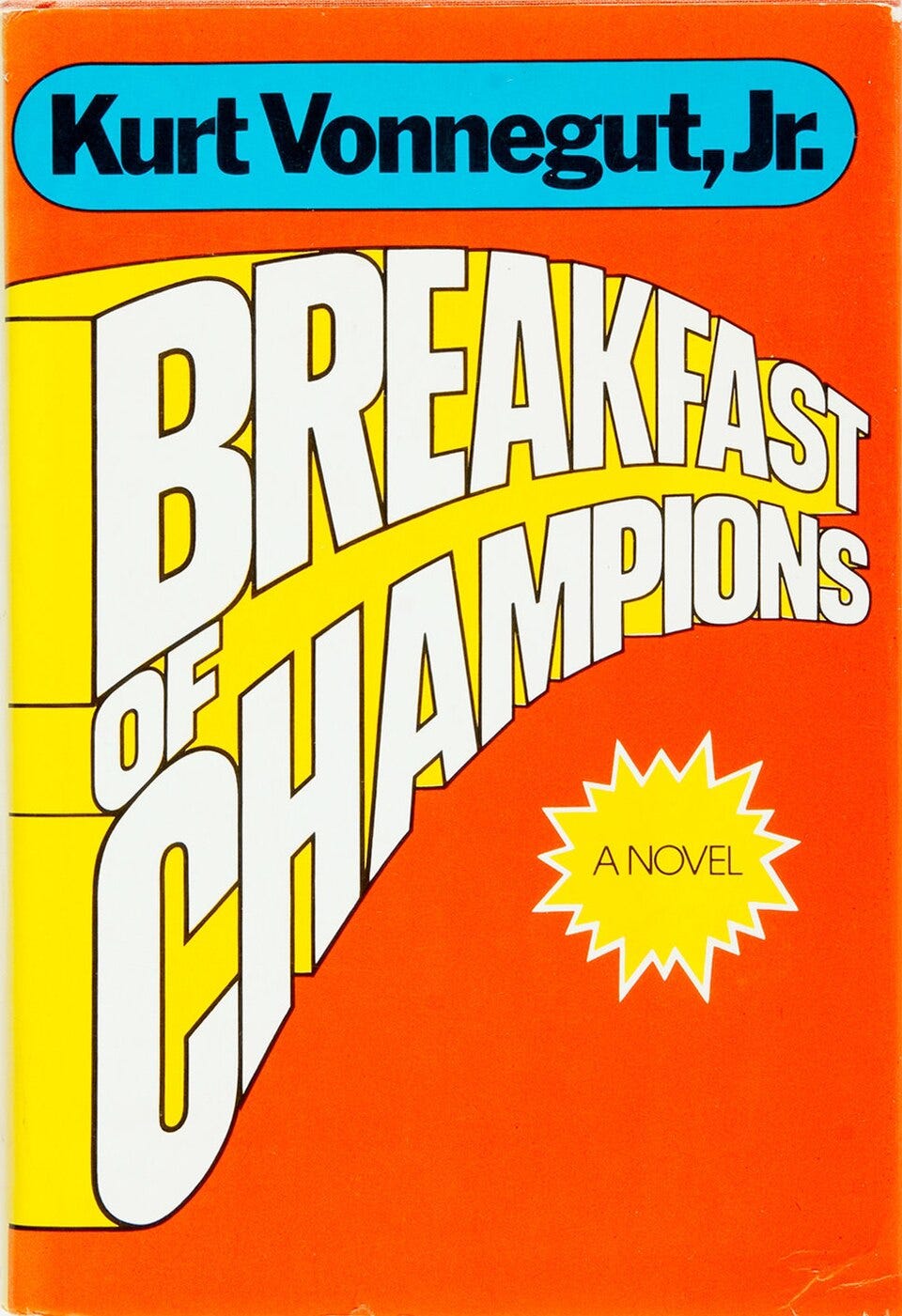
Breakfast of Champions, Kurt Vonnegut, Jr.
A Sample of World Lit:
Tangi, Witi Ihimaera [New Zealand/Maori]
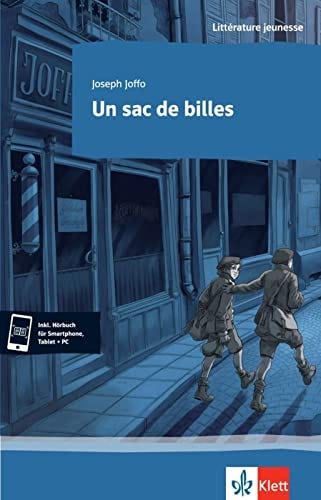
A Bag of Marbles, Joseph Joffo [France]
Life Is Elsewhere, Milan Kundera3 [Czechoslovakia/France/Czech Republic]
Água Viva, Clarice Lispector [Brazil]
The Gulag Archipelago [nonfiction], Aleksandr Solzhenitsyn 4 [U.S.S.R]
The Eye of the Storm, Patrick White5 [Australia]
Five Other Literary Works of 1951:
Regiment of Women, Thomas Berger 8
Gravity’s Rainbow, Thomas Pynchon
Three Special Mentions:
Fear and Loathing on the Campaign Trail ‘72 [reportage], Hunter S. Thompson9
There Is A Tree More Ancient Than Eden, Leon Forrest 11
My List:
Rubyfruit Jungle, Rita Mae Brown
The Siege of Krishnapur, J. G. Farrell12
Flags in the Dust [uncut version of Sartoris, 1929] Wm. Faulkner
The Taking of Pelham One Two Three, John Godey
Child of God, Cormac McCarthy14
Ninety-two in the Shade, Thomas McGuane15
https://takemeback.to/books/date/1973
Susann: Her third novel, following bestsellers Valley of the Dolls (1966) and The Love Machine (1969). She became the first writer in publishing history to have three consecutive #1 novels on the New York Times Best Seller list.
Ende: From Wiki:
. . . also known as The Grey Gentlemen or The Men in Grey, is a fantasy novel by Michael Ende, published in 1973. It is about the concept of time and how it is used by humans in modern societies. The book won the German Youth Literature Award in 1974. The full title in German (Momo oder Die seltsame Geschichte von den Zeit-Dieben und von dem Kind, das den Menschen die gestohlene Zeit zurückbrachte) translates to Momo, or the strange story of the time-thieves and the child who brought the stolen time back to the people.
Ende also wrote The Neverending Story (1979), another widely popular fantasy novel.
Kundera: Born in Czechoslovakia, exiled himself to Paris, became a citizen in 1981. Granted citizenship by Czech Republic in 2019. I found his earlier novels The Book of Laughter and Forgetting (1979) and The Unbearable Lightness of Being (1984) consequential in my life as a developing writer. Even more so were two books on writing The Art of the Novel (1986) and Testaments Betrayed: An Essay in Nine Parts (1993).
Here’s an example of his thinking (from one of my craft essays):
Kundera believes, in fact, that novels are built upon a base of key words. In a later book, Testaments Betrayed, he takes up this idea again. Comparing several translations of a passage from Kafka’s, The Castle, he decries the “synonymizing reflex.” Where Kafka chose the same German words repeatedly, his translators try to “enrich” the vocabulary. “Richness of vocabulary,” Kundera says, “is not a value in itself.”
The breadth of the vocabulary depends on the aesthetic intention governing the work. Carlos Fuentes’s vocabulary is nearly dizzying in its richness. But Hemingway’s is extremely narrow. The beauty of Fuentes’ prose is bound up with the richness, the beauty of Hemingway’s with narrowness of vocabulary.
Gulag: This is a tome—I’ve never made any headway on it myself. If you want a quick taste of Solzhenitsyn, read One Day in the Life of Ivan Denisovich [the 1991 translation by H. T. Willetts (Noonday/Farrar Straus Giroux)]. Solzhenitsyn led a complex life in and out of the Soviet Union—take a look at his Wiki. I have no idea how widely he’s read these days, but he was a major figure in Russian public life for many years.
Patrick White: A major figure in Australian lit. I always feel I should’ve read him by now, but I still have not. He’s the only Australian to win the Nobel Prize in Literature (1973).
Amis: Suppose you’re the kid of a really famous novelist, whaddya do? Some join the family business, becoming editors, journalists, memoirists, poets, or novelists . . . little-recognized, widely known, or outstripping Mom or Dad:
The Black Tulip, Alexandre Dumas, père (1850) // The Lady of the Camillias, Alexandre Dumas, fils (1848)
Domestic Manners of the Americans, Fanny Trollope (1832) // Anthony Trollope [47 novels!]
Ending, Hilma Wolitzer (1974) // The Female Persuasion, Meg Wolitzer (2019)
Golden Days, Carolyn See (1987) // The Island of Sea Women, Lisa See (2019)
The Rachel Papers was Martin Amis’s first novel. I included in this list because he grew into a major British writer, as famous as his father, Kingsley, who wrote prolifically and was a public figure in England’s literary cosmos—probably best-known for Lucky Jim (1954).
The Rachel Papers got decidedly mixed reviews, though winning the Somerset Maugham Award for best novel by a writer under the age of thirty-five. Later in his career, he soured on it. In 2010 he told the Sunday Times: “A first novel is about energy and originality, but to me now it looks so crude. I don’t mean bad language – it’s so clumsily put together. The sense of decorum, the slowing a sentence down, the scrupulousness I feel I have acquired, aren’t there. As you get older, your craft, the knack of knowing what goes where, what goes when, is much more acute.”
From Wiki: Amis’s work centres on the excesses of late capitalist Western society, whose perceived absurdity he often satirised through grotesque caricature. He was portrayed by some literary critics as a master of what The New York Times called “the new unpleasant-ness.” He was inspired by Saul Bellow and Vladimir Nabokov, as well as by his father, Kingsley. Amis influenced many British novelists of the late 20th and early 21st centuries, including Will Self and Zadie Smith.
My favorite of his many novels is Time’s Arrow (1991). This is what I once said about it in an essay:
In Martin Amis’s Time’s Arrow, a man receives an electric shock, which creates, within him, a doppelganger, a separate consciousness who must now begin to figure out who he’s trapped inside of. Simultaneously, time begins to move backward—each act is seen (thus understood) in reverse. Food is disgorged from mouths, packed into cans, taken to stores. A hand is applied to a woman’s face and instantly she stops weeping (he must be a healer!). We’d soon tire of this device were it not for the compelling thematic reason behind it (I won’t spoil it for you).
Crash: From Wiki:
The novel received divided reviews when originally published. One publisher’s reader returned the verdict, “This author is beyond psychiatric help. Do Not Publish!” A 1973 review in The New York Times was equally horrified: “Crash is, hands-down, the most repulsive book I’ve yet to come across.”
Berger: 23 novels, five books of stories.
Blurbage: “Regiment of Women,” for all its exaggeration and grotesque parody, has been imagined with such ferocity and glee that we assent to it almost in spite of ourselves, celebrating with Berger that anarchic individuality that outlasts all the forms that language and society attempt to impose upon it.
Fear & Loathing: Thompson was a larger-than-life figure, the epitome of gonzo journalism. What is gonzo journalism? Beginning in the 1960s, traditional journalism was augmented by a movement called New Journalism—the essential difference is that the gathering of the story became part of the story. It was also called “participatory”journalism. For instance, George Plympton (incidentally, one of the Paris Review’s founders) published Paper Lion (1966) about training with the Detroit Lions. Many science/nature writers followed (David Quammen and Tim Cahill being two). A new wave of journalists with distinctive voices emerged—Joan Didion, Norman Mailer, Tom Wolfe, Gay Talese, and scads of others. I think gonzo journalism, as a term, might’ve started with Thompson’s earlier book, Fear and Loathing in Las Vegas (1971). Writers have always blurred the lines between fact and fiction—some novels are exceedingly autobiographical, some nonfiction based closely on personal experience—but this mode seemed perfectly suited to examining the counterculture of the 60s/70s. Wolfe’s The Electric Kool-Aid Acid Test (1968) was another classic (you should read it). Fear and Loathing on the Campaign Trail ‘72 is about Thompson’s coverage of Richard Nixon’s re-election campaign. Thompson was—how to say it?—a bit of wild man. Guns and drugs (lots of drugs) were involved. His work in Rolling Stone Magazine was accompanied by gonzo illustrations by Ralph Steadman.
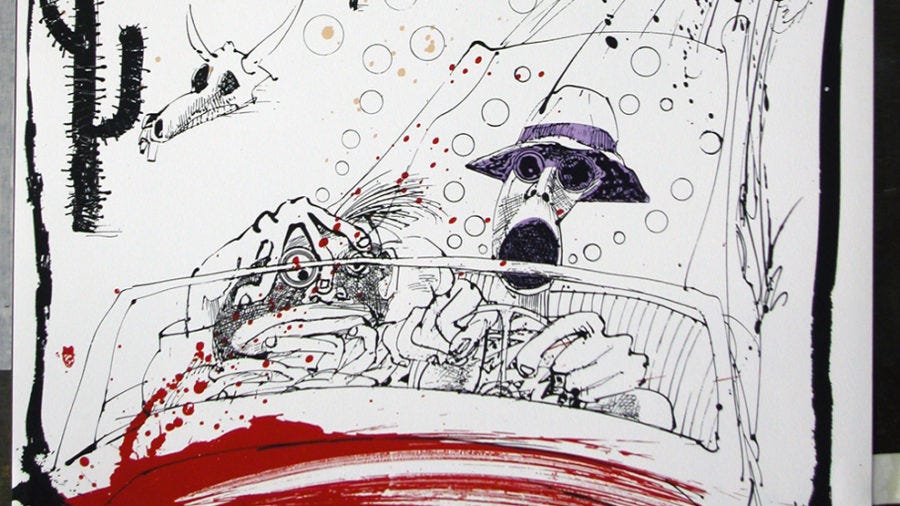
A caricature of Thompson [Raoul Duke] became a staple of Doonesbury.
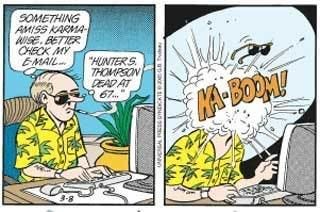
https://en.wikipedia.org/wiki/Hunter_S._Thompson
B. S. Johnson: English, modernist/experimental. I know him because an earlier novel turned up in Birth Year Project: 1969, The Unfortunates. Here’s what I wrote about him then:
The Unfortunates was published in a box with no binding (readers could assemble the book any way they liked, apart from the chapters marked “First” and “Last.” As a structural experiment, it’s reminiscent of Julio Cortázar’s novel, Hopscotch (1963). [Cortázar’s chapters could be read consecutively, up to a stopping point . . . or read according to a numbered scheme adding chapters not in the first reading, subtracting others. Over the years, various poets and fiction writers have tried to emulate the formal experimentation visual artists had pursued since the earliest days of the 20th Century—cubism, for instance, which let painters show all sides of an object at once, or how it moved through space/time as in Duchamp’s “Nude Descending a Staircase” . . . but reading is stubbornly linear and most of the attempts to free the page from its constraints proved gimmicky, irritating, unillum-inating.
I haven’t read The Unfortunates [or even seen a copy], but I imagine that absorbing the chapters in random order isn’t an impossible burden to lay on the reader [much less than trying to parse unconventional page layouts, for instance, attempts at simultaneity such as side-by-side texts or merging texts within the flow of lines on the page]. There are a few “experimental” books in the canon of great reads—but only a few. So far I’ve spent two-hundred-some words on this footnote and haven’t even touched on what the novel’s about. Maybe that should tell us something. For the record, Jonathan Coe [The Rotter’s Club, 2001] called The Unfortunates “one of the lost masterpieces of the sixties.”
Click on the link in the list for a rundown on Christie Malry’s Own Double-Entry.
Leon Forrest: This was his first novel; his editor for this and the next two books was Toni Morrison (who worked in publishing before she became a world-class writer and winner of the Nobel Prize in Literature (1993); it had an introduction by Ralph Ellison. I’d never heard of him, but he seems yet another example of a writer whose work should’ve kept him from disappearing down the time hole.
J. G. Farrell: The second book of his Empire Trilogy; the others: Troubles (1970) and The Singapore Grip (1978). Their only connection is that each is set in a former British colony. The Siege of Krishnapur treats the Sepoy Rebellion in 1857. They’re all good reads. Working on Birth Year Project: 1951, I happened upon another novel about the same events: Nightrunners of Bengal, by John Masters.
https://en.wikipedia.org/wiki/J._G._Farrell
Red Shift: A NYRB reprint. Has an interesting structure: three sections, the first in Roman Britain, the second during the English Civil War [mid-1600s], and modern day. The common element is a place. Don’t skip Garner’s Introduction, where he relates a cool story about the nature of time and human memory.
Child of God: McCarthy’s writing isn’t for everybody; I don’t argue about him. I tell people The Road will be read way into the future. I tell people Suttree is my favorite novel (of anyone’s) and let it go at that. He wrote four novels before decamping to the Southwest and writing Blood Meridian and the Border Trilogy, which is where most readers caught up with him. Before Suttree were: The Orchard Keeper (1965), Outer Dark (1968), and Child of God. Lester Ballard is the child of God, and he’s a nasty piece of work. If you don’t like nasty pieces of work, you might skip this one (and Outer Dark). However, if you like your humor very dark indeed, you might like how the book ends.
So much has been written about McCarthy, who went from utter obscurity to big-time fame—you can read up on him if you want. [At least read a blurb about Suttree—life among the underclass on the Ohio River c. 1952, a book full of pathos, but also fiercely hilarious. But I said I wasn’t going to twist your arm.]
Tom McGuane: Native of Michigan, has lived in Montana’s Paradise Valley since the late 1960s. Outdoorsman, flyfisher, rider of cutting horses; has written a steady stream of novels, short story collections, and nonfiction works—also screenplays including Rancho Deluxe (1975), The Missouri Breaks (1976), and Tom Horn (1981). Centerpoint of a community of writers—William Hjortsberg, Jim Harrison, Richard Brautigan, the painter Russell Chatham, and others.
Sula: Her second novel, thin, amazingly well written. Just read it, if you haven’t. If you have, it wouldn’t hurt to read it again. Here’s a tiny taste:
But it was a love that, like a pan of syrup kept too long on the stove, had cooked out, leaving only its odor and a hard, sweet sludge, impossible to scrape off.
I’ve read The Taking of Pelham One Two Three!
Interesting list. I’ve read most of McCarthy. I actually read Gulag but don’t remember much. You’re right. I need to read Sula again.