

Reading Projects [27]: Plays

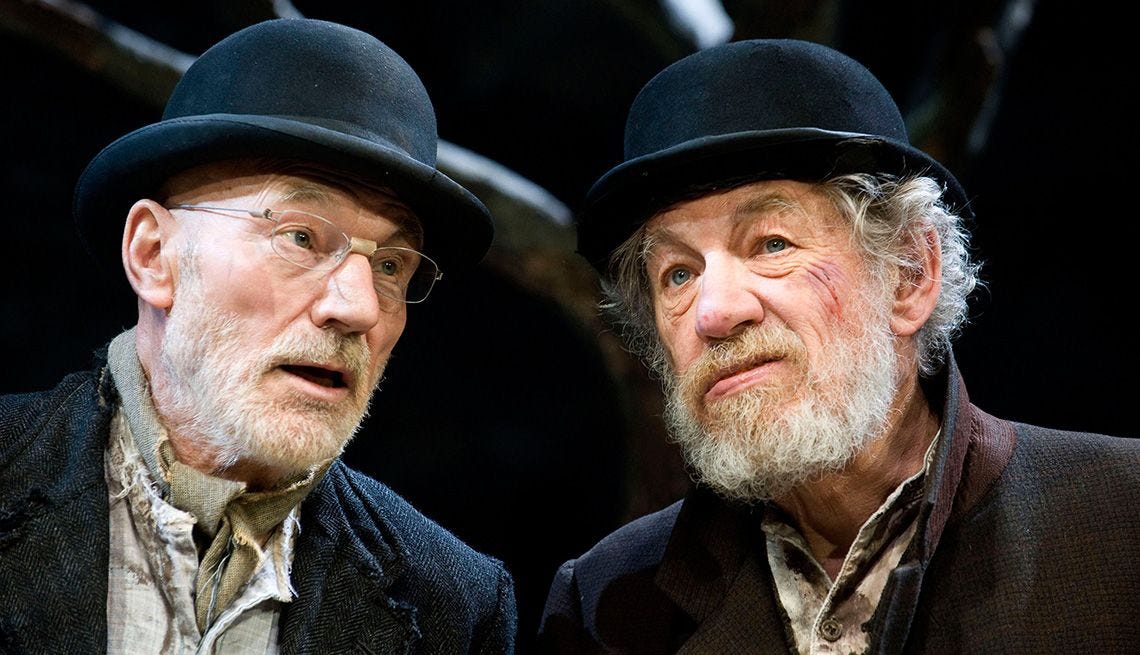
[Any sign of him? Naw, not a trace. Bloody hell.]
1.
When’s the last time you read a play (not counting Shakespeare)?
A few years back, picking off rogue years in my quest to read a novel1 published in each year, I’d sometimes read a play instead:
The Cherry Orchard, Anton Chekhov (1904)
Uncle Vanya, Anton Chekhov (1899)
A Doll’s House, Henrik Ibsen (1879)
She Stoops To Conquer, Oliver Goldsmith (1773)
My Life List has a scattering of others—read, not seen (or seen only when filmed or adapted for film):
Glengarry Glen Ross, David Mamet (1983)2
Betrayal, Harold Pinter (1978)
Who’s Afraid of Virginia Woolf?, Edward Albee (1962)
Some I read because of who wrote them:
The Dumbwaiter, Harold Pinter (1961)
Krapp’s Last Tape, Samuel Beckett (1959)
Endgame, Samuel Beckett (1958)
Waiting for Godot, Samuel Beckett (1953)
The Bald Soprano, Eugène Ionesco (1950)
Our Town, Thornton Wilder (1938)
Or because I’d read the source book and wanted to see how a master transmuted scholarship into a drama—for instance, The Devil in Massachusetts: A Modern Enquiry into the Salem Witch Trials, Marion L. Starkey (1949) became:
The Crucible, Arthur Miller (1953)3
Or sometimes because I loved the book and the film, I wanted to read the screenplay:
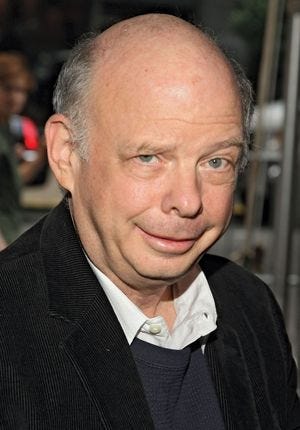
Or even because the writer’s an offbeat rubber-faced character actor whose father was the long-time editor of The New Yorker and whose plays are wryly off-kilter:
The Designated Mourner, Wallace Shawn (1996)
Aunt Dan and Lemon, Wallace Shawn5 (1985)
And a few others I read after seeing the play live.
Middletown, Will Eno (2010)
August: Osage County, Tracy Letts (2007)
Copenhagen, Michael Frayn (1998)
I should also include Spalding Gray’s monologs6:
Morning, Noon and Night (1999)
It’s a Slippery Slope (1997)
Gray’s Anatomy (1994)
Monster in a Box (1992)
Swimming to Cambodia (1985)
2.
I like reading scripts. I like thinking about the technical and/or aesthetic differences between versions of the same story. As a writer, I’m fascinated by how a naked line on the page can blossom with great acting (and directing/sound and lighting/editing and production design and so on). I like to isolate a moment in film and think about how I’d say it on a page of fiction, and wonder how much of the moment was in the script and how much was improvised or given meaning by a tight shot of a mouth or gesture.
Anyway, the other day I scanned down the list of the last 40 years of the Pulitzer Prize winners and finalists. Of the 120 plays, I’d seen three. I recognized maybe 15 percent of the names: August Wilson, Edward Albee, Lynn Nottage, Suzan-Lori Parks, Wendy Wasserman, David Mamet, Horton Foote, Neil Simon, John Guare, and a few more. This is the mainstream stuff—there are surely lists of contemporary playwrights that have many more names I’ve never heard of.
I think my point here is that the worlds of literary fiction and playwriting occupy separate islands. Some renowned novelists have written plays7. The only writer I can think of who achieved excellence in both genres was Chekhov (who wrote short stories, not novels—and was a medical doctor).8
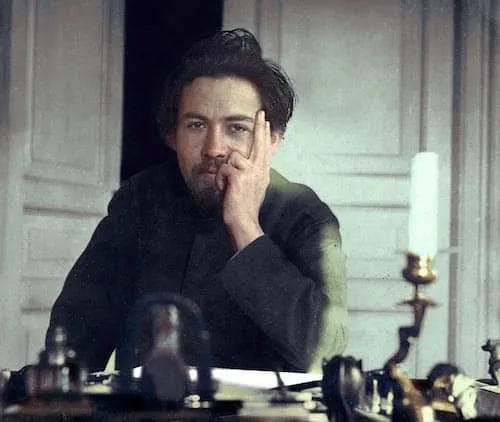
[Anton, you sly dog!]
What to make of this?
First, I guess, see more plays. If you like musical theatre, fine, there are great musicals, but I’m referring to plays that don’t have as their primary goal making you feel good.9
With the predominance of film, plays have gotten short shrift—as mentioned, they’re expensive to see live, hard to find/access via streaming, and in bookstores they tend to be off on their own you’re not sure where. Which is a pity, really. Because some of our finest writers are playwrights. Then again, they’re not that hard to find—you just have to decide to do it. And, most contemporary plays take less time to read than a skinny novel.

51 Contemporary Plays Written After 2000
The Top 25 Plays of the 21st Century So Far
5 Contemporary Playwrights You Should Know About Right Now
Five Emerging Playwrights to Keep Your Eyes On…
Ten Plays You Can Read Like Novels: On the Pleasures of the Script as Literature
Plays vs. Novels (You’ll Never Guess What Happens Next)
10 Novels by Playwrights (And 3 Novels by Actors)
5 Dramatists as Novelists: The Joy of Reading Plays
The Project/Challenge:
On the way down here, you passed a section of links. I haven’t done the math, but there must be over a hundred titles and brief descriptions. I’d like you to visit enough of these that you’re able to collect a small pile of play descriptions you might want to read (most will be in print, but you’ll need to check).
2. Once you’ve done that, pick out a couple and read them. Here’s an example, one that appealed to me:
Lemons Lemons Lemons Lemons Lemons, Sam Steiner (2015)
A thought-provoking and intimate play set in a world where a government-imposed “Hush Law” limits individuals to speaking only 140 words per day. The story follows a couple, Bernadette and Oliver, as they navigate the challenges of their relationship in this restrictive new reality. Through clever, minimalist dialogue and poignant moments, the play explores themes of communication, connection, and the power of language. It’s a moving and inventive look at how we express ourselves and what remains unsaid. —from The Reading List/Duncan Macmillan
Over the next six months, read six more plays, including:
a monolog,
a two-hander [Steiner’s play is one of these]10
something funny/goofy/absurd/whimsical,
something biting/caustic/politically charged/injustice-fighting,
one cited somewhere in today’s post.
Acquaint/re-acquaint yourself with all the play-putting-on venues in your bailiwick. Start paying attention to their offerings. Try to see a play somewhere you’ve never visited before. If possible, check out their list of past productions—you might find one for the challenge.
Extra Credit:
Google a play that’s had multiple productions and have a look at the sets and costumes and so on—you should be able to access reviews or other commentary plus photos for them as well. When we watch, say, a new film adaptation of Pride and Prejudice or Persuasion we know we’re seeing a re-interpretation of the novel. Many plays/films adapted from classic are updated—the story may or may not be much altered, but remakes often reflect changed social attitudes, our ability to process information faster, evolved thoughts about where to draw the line between suggestion and depiction, how the lead actors should look (sometimes, unless race is a central issue in the work, casting may be “color-blind,” and so on. Pick a play that’s had two (or more) versions [or it could be a film based on a novel or play] and write a one-page response to their differences.
Alternately, consider staging a new production of a play you know: What would you do differently? How faithful do you think you should be to the playwrights staging notes in the script? Some are site/time-specific—for instance, Nilo Cruz’s Anna in the Tropics11 takes place in Ybor City, a district of Tampa, Florida, where up until they were replaced by mechanization, Cuban immigrants rolled cigars; as they worked they were read to by a lector (a practice brought with them from Cuba). Anna, as in Anna Karenina. But many others might be transposed. Give it a shot.
Reminder that the Birth Year Project is still open for business:
You supply your birth year, I respond with an overview of what was published that year—the popular/well-known titles first, then some books I’d recommend. If your year’s already been done, I’ll do an update. So far, we’ve done 29 years—between 1939 and 1992 (age range: 33 to 86).
The current census: 1992 // 1989, 1986, 1984, 1981, 1980 // 1978, 1973, 1971 // 1969, 1966, 1965, 1964, 1963, 1961, 1960 // 1959, 1958, 1956, 1955, 1954, 1952, 1951, 1950 // 1948, 1946, 1945, 1944 // 1939
Extra credit: You read one of the books (ideally one you’re unfamiliar with), then tell me what you thought. If we get enough of these, I’ll aggregate and post.
Hello to any of you who’ve made it all the way down here. So here’s the deal: A while ago I announced that we’d broken through the 500-subscriber barrier . . . and immediately the fates said, Not so fast, bub, and twenty or so headed for the door. A few more snuck in while the door was ajar but we’re still shy of 500. Here’s my offer: If each of you loyalists bring in one thoughtful friend you’ll make me, you know . . . OK, here’s the thing (you’ve heard this before), the book bloggers over at Instagram have gazillions of followers and all they do is hold up a bunch of books and say, This one’s really cool! And I think, But, but . . .
In fairness, here are two guys I like:
https://www.instagram.com/_joshreadsbooks/
https://www.instagram.com/chrisreadsbooks_/
That’s it for today. See you in two weeks.
As I prepped this post, screenplays began slipping in the side door. I decided they needed their own post, which will appear either next time, or the time after.
For now, be stout-hearted. Take to the barricades!
Novel: Usually, but sometimes—especially the farther back I got, it was a memoir, treatise, story/essay collection, journal or collection of letters . . . anyway, a book I considered literature.
Mamet: If you don’t know Mamet you should have a listen to his dialog. It’s not strictly realistic—it’s staccato, rapid, repetitive. It’s somehow the essence of a scene rather than what it would sound like if you were there IRL. I’m not saying you should emulate that sound, only that it’s possible to do it another way.
The Crucible: How to write about the Joe McCarthy/commie-under-every-bed/Senate hearings frenzy without mentioning it.
English Patient: Screenplays have to leave stuff out—it’s interesting watching how the screenwriters wrestle with this. In The English Patient, the backstory of Kip (the Sikh sapper, Hana’s lover) is cut which reduces his moral standing in the story. In another case, an image (being hoisted up to see murals in a cathedral by the light of a flare) is kept but given to a different character.
Wallace Shawn: One more tidbit . . . Shawn was one half of French director Louis Malle’s, My Dinner With Andre (1981), theatre director Andre Gregory being the other. Some years later, Shawn gathered actors (including Julianne Moore) to put on Chekhov’s play, Uncle Vanya in small theatres and other unusual venues—even people’s living rooms. Louis Malle got wind of the project and wanted to film it. Vanya on 42nd Street (1994) is set in a rehearsal space—the actors arrive, sit and chat, etc.; after a while, you realize they’ve started doing the play. Here’s Roger Ebert’s take on it.
Spalding Gray: For whatever reason, I loved spending time in his head. I was lucky enough to see one of the monologs live in Seattle (I’ve seen the filmed versions of, I think, all of them). He came to a bad end, I’m sorry to report: after several false alarms, he slipped over the railing of the Staten Island Ferry in January 2004 . . . he’d suffered from bouts of mental turmoil for years, but visiting Ireland three years earlier, he’d been seriously injured in a car crash—broken hip, broken leg, fractured skull requiring a titanium plate. In 2011, excerpts from his journals were published and I acquired more of his backstory, including his early history with experimental theater, his many film roles, and long-time friendship with Willem Dafoe [The Journals of Spalding Gray, edited by Nell Casey (in collaboration with Gray’s widow, Kathie Russo)].
Today’s post is about reading plays, but in the case of Gray’s monologs, you should watch one one [easily available, I think] to get a feel for his delivery, also to hear his accent.
Novelists writing plays [1]: There’s also Jean Paul Sartre and Thornton Wilder.
Novelists writing plays [2]: AI helped with the above . . . or, you know, “helped.” First it wanted to tell me about plays based on novels. No, no, no, I said. You see, what I want to know is . . . AI said, Oh, hey, sorry, I get it now, and listed Tennessee Williams, Edward Albee, Arthur Miller, Sarah Ruhl, Lynn Nottage, and Suzan-Lori Parks.
Frowny face. As it turns out, Arthur Miller did write one novel, Focus (1945). Ditto, Tennessee Williams, The Roman Spring of Mrs. Stone (1950), and Suzan-Lori Parks, Getting My Mother’s Body (2003).
If you look at, say, the period from 1750-1850, you find many writers who had feet in both camps. What I was trying to suss out was major contemporary novelists who wrote a play or two. This appears to be too fine a distinction for my “helper.”
Making You Feel Good: Putting on plays is really expensive and no theatre company wants to go bust; the ones who produce the most serious (which includes seriously funny) contemporary plays have to walk a fine line. Often, it’s the small indie companies who put on eccentric/edgy/untested/outside-the-box plays—or sometimes university theatre departments. Check out the listings in your local What’s Going on in Weaverville freebies that include such venues along with the ones who can afford to advertise bigly.
https://www.editoreric.com/greatlit/great-literature-long-list-18th-century.html
Two-hander: The Gin Game is another. So are Topdog/Underdog, Frankie and Johnny in the Clare de Lune, and others.
Anna in the Tropics: Winner of the 2003 Pulitzer Prize for Drama.
Does Under Milk Wood count? It was composed as a radio play. I recently read it for the first time with the book in my lap while listening to the BBC broadcast recording with Richard Burton and others. I don't think I'd have enjoyed the written version as much without listening to it at the same time, and I wouldn't have followed the spoken version with such rapture if I wasn't also reading asking in real time.
Many centuries ago when I was in my 20s I couldn't get enough of reading Edward Albee's plays, though I've only ever seen maybe four of them performed. He had a real influence on my appreciation of writing beyond chapter- and paragraph-bound narrative.
If you can find it, read (or see) The Royale, by Marco Ramirez. It’s a retelling of the 1910 fight, Jack Johnson vs Jim Jeffries. Any play about boxing seems a worthwhile, but this one is exceptional. There was a show on PBS (?) that did highlights of one of the casts and clips of the play, but it’s been a few years, back when I was still teaching Sports Lit at Marquette University. Such a good read. Highly recommend. Right up there with Katherine Dunn’s essays on boxing.