

Reading Projects [17]: Freeman's Writers' Faves

New subscribers/followers: Thanks for signing up—I promise not to waste your time!
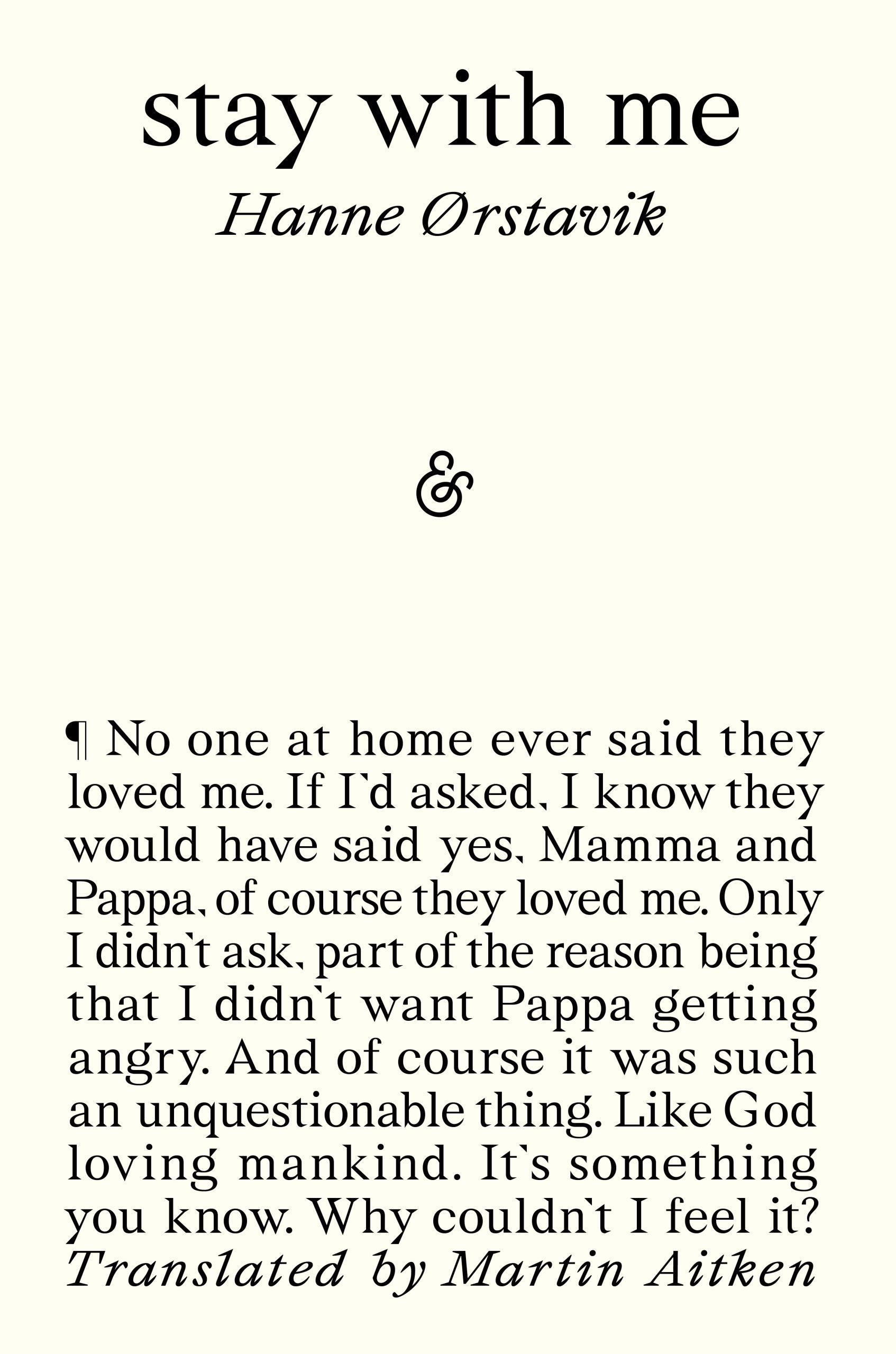
The other evening I finished reading the U.K. edition of Hanne Ørstavik’s novel, Stay With Me (2023)1 (friends of this Substack will recognize her name from earlier posts). I decided it was past time to find out how to pronounce her surname2 . . . and in the course of ferreting that out, I came across a two-year-old piece from LitHub, which is the actual subject of today’s post:
88 Writers on the Books They Loved in 2022: The Year in Reading From Contributors to Freeman’s
https://lithub.com/88-writers-on-the-books-they-loved-in-2022
[More on John Freeman and Freeman’s here.3 ]
Paging through this feature, I was happy to see titles I’d mentioned in earlier posts. Besides Ørstavik’s, Ti Amo (2020):
The Passenger, Cormac McCarthy (2022)4
Free Love, Tessa Hadley (2022)
Fight Night, Miriam Toews (2021)
Forbidden Notebook, Alba de Céspedes (1952)5
A couple more I can vouch for:
The Kingdom of Sand, Andrew Holleran (2022)
What Are You Going Through, Sigrid Nunez (2020)
And an old favorite:
The Woman Warrior [memoir], Maxine Hong Kingston (1975)
Plus a couple of Booker winners, and a couple of slipstream novels I’ve had on my radar:
The Employees: A Workplace Novel of the 22nd Century, Olga Ravn (2022) [Denmark]
Time Shelter, Georgi Gospodinov, (2020) [Bulgaria]
But I was struck by how many of the titles I’ve never so much as heard of—and that’s today’s theme.
I’ll list a handful below. But, first, three thoughts:
a) I encourage you to visit LitHub and scroll through the whole post—on general principles, but also because, fiction being our thing here, I’ve omitted straight nonfiction/essay6 and poetry7.
b) I know I’m preaching to the choir, but I’ll say it anyway: We’re a community of readers; communities work best when they aggregate the passions and quirks of their constituents. In our time, we’re assaulted by noise—canned opinion, incessant marketing, AI, etc. From the noise comes useful information, at times, but we need to heed singular/mongrel/unpaid voices as well: writers introducing us to other writers, ones lost in the flow—new ones, older ones on the cusp of being forgotten, obscure-ish ones, and so on. This is the dynamic fueling David’s Lists 2.0: writers vouching for the work of other writers, maybe adding just enough weight to the scale that tips it in favor of a book being read, not lost/forgotten/ignored. It’s an ethical act, I believe, a responsibility.8
c) I like making Great Big Lists—the meatier the list, the fewer minutes available for personal-demon wrangling. Big Lists are good for bird’s eye views, but less good for encouraging you to read individual titles. Today’s post is more about the latter (and took a heroic amount of self-restraint on my part).
The Ten Novels:
1. Three based on who chose them:
From Colum McCann:9
Properties of Thirst, Marianne Wiggins (2022)10
From Cynan Jones:11
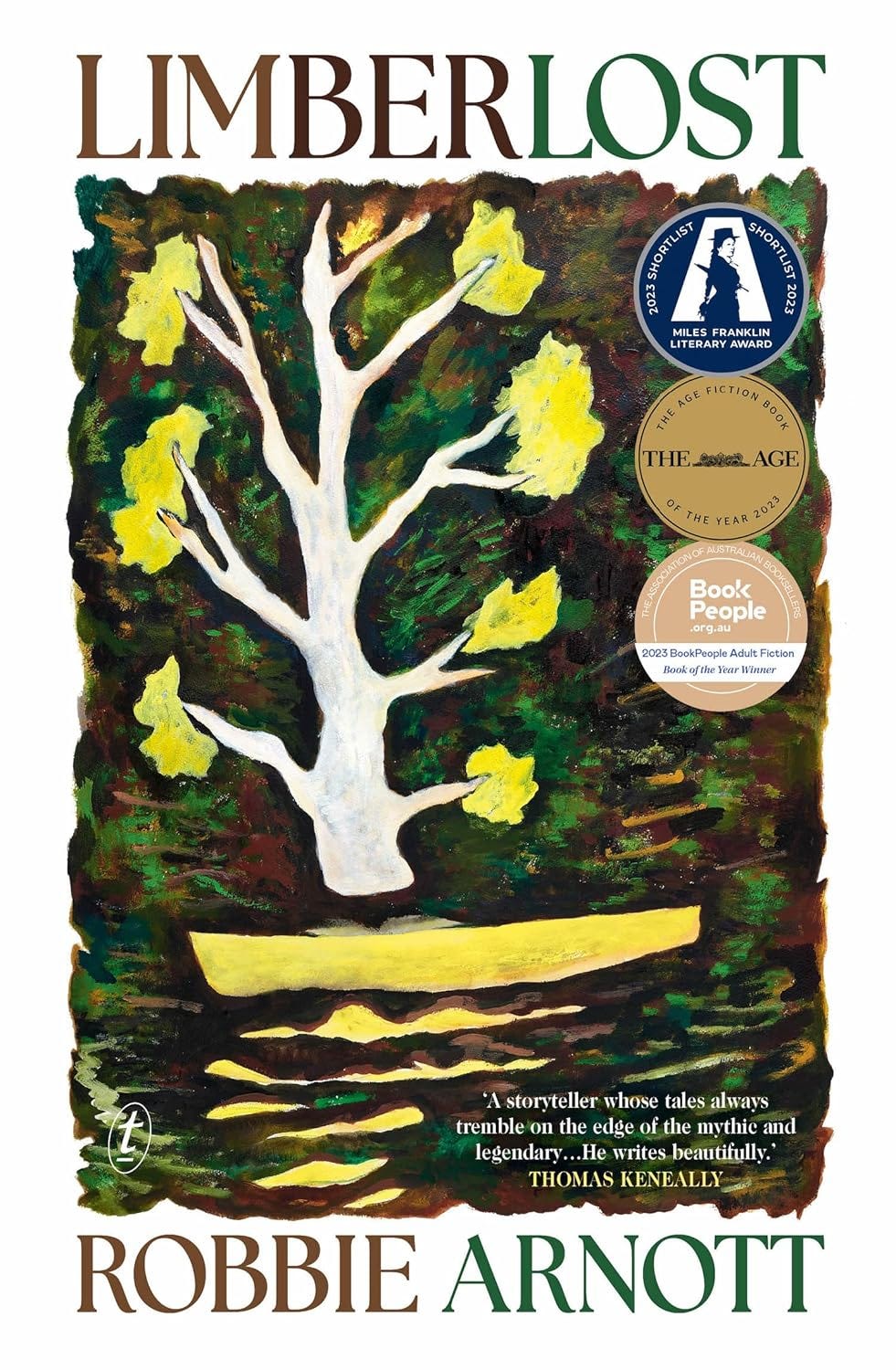
Limberlost, Robbie Arnott (2022) [Australia]
From Maggie Nelson:12
My Dead Book, Nate Lippens (2021) [New introduction by Eileen Myles]
2. Three I put on my own TBR list:
Cold Enough for Snow, Jessica Au (2022) [Australia]
. . . one of the most sublime novels I’ve ever read. From the first sentence, you see the author’s insistence on subtlety pay off. Its themes are familiar, but the way Jessica handles those themes made me rethink assumptions I had about the rules of fiction. A delicate and beautifully written novel . . .
—Camonghne Felix, Dyscalculia: A Love Story of Epic Miscalculation (2023)
Wandering Souls, Cecile Pin (2023) [France]
. . . what a stunning novel it is . . . I blazed through it in a day. A poignant and important story following the life of a Vietnamese family in the UK, it is written with so much tenderness and sensibility.
—An Yu, Ghost Music (2022)
The Drowning, Hammour Ziada (2022) [Sudan]
. . . opens dramatically with the appearance of the drowned body of a woman at a village near the shores of the Nile. Who is she? Why was she killed? Neither of these questions are ever answered and instead we are plunged into the life of the villagers, their conflicts, histories, and relationships. This is a gripping, visceral novel, written with extraordinary energy.
—Leila Aboulela, River Spirit (2023)
c) Two in translation:
Paradais, Fernanda Melchor (2021) [trans. from Spanish by Sophie Hughes]
. . . two boys—one cosseted, the other exposed—both messed up beyond their own shaky understanding of what claws at them. Melchor’s disturbing story of impending monstrosity is rooted in the real: grotesque income inequality, the inescapable miasma of the narco in Mexican society, youth already hollowed out by circumstances they were in no position to change.
—Oscar Villalon, writer, managing editor of Zyzzyva
Archipelago of Another Life, André Makine (2016) [trans. from French by Geoffrey Strachan (2019)]
. . . an insanely gripping journey across Stalin’s Siberia, simultaneously a fable, thriller, political statement and love story. It made me buy his other books in translation as soon as I could.
—Anuradha Roy, The Earthspinner (2021)
d) Three Others:
The History of a Difficult Child, Mihret Sibhats (2023)
. . . astonishing. Irreverent, insightful, and poignant and funny all at once. It is the story of a young girl growing up in Ethiopia as the revolution of 1974 sweeps in and changes life forever. But it’s also a meditation on religion, God, family, and identity, and personal, necessary rebellions. I find myself regularly thinking about this book after reading it. It’s that good, it’s that fearless.
—Maaza Mengiste,The Shadow King (2019)
Calling For a Blanket Dance, Oscar Hokeah (2023)
. . . such a vital and powerful novel, giving us a wide range of voices over decades of Native life in a new and real way, from a writer I will from now on read everything he writes. [The] cast and performance of Calling For a Blanket Dance is so satisfyingly dynamic . . . nothing less than stunning. I could not more highly recommend this book.
—Tommy Orange, There, There (2018)
Monster in the Middle, Tiphanie Yanique (2021) [Virgin Islands]
. . . a novel-in-stories that reinvents old forms—like the Hero’s Journey—to give us an intergenerational love story, or rather, a love story between two people, each of them trailed by ancestral heartaches.
—Claire Messud, This Strange Eventful History (2024)
e) One potential guilty pleasure:
Big Swiss, Jen Beagin (2023)
A sex therapist’s transcriptionist who falls in love with a client while listening to her sessions. Yes and YES!
-–Matt Sumell, Making Nice [stories] (2015)
Best Title:
In a Land Without Dogs the Cats Learn to Bark, Jonathan Garfinkel (2023)
A few of the other recommenders:
Kerri Arsenault, Alexander Chee, Geoff Dyer, Athena Farrokzhad, Aminatta Forna, Lauren Groff, Mariana Enriquez, Tess Gunty, Rawi Hage, Mieko Kawakami, Rachel Kushner, Valeria Luiselli, Semezdin Mehmedinović, Maaza Mengist, Sayaka Murata, Pola Oloixorac, Anuradha Roy, Arthur Sze, Lily Tuck, Yiyun Li, Xiaolu Guo
The Reading Project/Challenge:
Each month, for the next six months, read (at least) one book from:
The ten13 books in today’s post . . .
Or books by any of the recommenders of those books
Or from the other recommenders list.
Then report back.
A Reminder:
The Birth Year Project: is still open for business . . .
You supply your birth year, I respond with a summary of books published that year—the popular/well-known titles first, then some I'd recommend. If your year's already been done, I'll do an update. So far, we’ve done 21 years (I think), between 1939 and 1989.
[Note: The BYP Index in navigation bar is still messed up, the fix for which I’ve yet to discover. The newest ones, not in index: 1955, 1960, 1939.]
Extra credit: You read one of the books (ideally one you're unfamiliar with), then tell me what you thought. If we get enough of these, I'll aggregate and post.
Ørstavik: Translated from Norwegian by Martin Aitkin, published in the U.K. by & Other Stories (2024). Archipelago will publish the U.S. edition next spring, April 2025.
Here are the others (original date of publication in Norwegian):
Ti Amo, Hanne Ørstavik (2020)
The Pastor, Hanne Ørstavik (2004)
Love, Hanne Ørstavik (1997)
Ørstavik, pronouncing: Near as I can tell, it’s East-ah-vik.
Freeman’s:
https://lithub.com/on-the-ending-of-a-literary-journal/
https://www.altaonline.com/california-book-club/a45445278/john-freeman-freemans-literary-journal-anthology-anita-felicelli/
Cormac McCarthy: His final novel, published in tandem with a slimmer companion, Stella Maris. I’ve written about him semi-often here [my favorite novel, of anyone’s, is Suttree (1979)]. But he’s not for everyone, and I don’t like all his work equally—the violence can be sickening, as in Blood Meridian, though many readers revere that work. When he does black humor, it’s exceedingly dark/exceedingly deadpan—and hilarious in a way that not-dark humor can never match [cf. the ending of Child of God (1973), or the Gene Harrowgate/watermelons and bat-poisoning sequences in Suttree].
All I want to say here is: a) If you decide to read The Passenger, read a good review because some interp will help, and b) Stella Maris is a tough sell for the uninitiated. It consists of an ongoing dialog between Alicia Western [sister of Bobby Western, the central figure in The Passenger] and her psychiatrist, and concerns the presence in her inner world of The Kid. You don’t have to like Alicia, but she is a world-class act of imagination.
Forbidden Notebook: The post for Birth Year Project [1952] included this one. Here’s the note from there:
The notebook/diary is prohibited, first, because it’s been bought on a Sunday when the shop is only allowed to sell tobacco. But this is 1952 and our diarist lives in a small apartment in an unnamed Italian city with her husband and two almost-adult children; she has no safe place to keep it, and writes her entries clandestinely. She and her daughter are poised at the edge of a deep generational divide concerning morals, the role of women, etc. I’m reading this now—the deeper I get the more immersed and impressed I am—and grateful for this new translation by Ann Goldstein brought out by Astra House. It’s good to be reminded that Elena Ferrante was not alone, and that there are many fine novels that would vanish into history were it not for someone’s concentrated attention and persistence.
[And now I’ve finished it and wonder if I’ll read a finer novel this year. The diary format allows a degree of candor and self-analysis that reminds me how superficial many novels are. The story became more and more engaging as the complexities of each character’s situation emerged. Why, I ask myself, as I so often do, did I not know of this novel? Though I know the answer, and that answer is at the heart of my Substack.]
Nonfiction/essay: There are a bunch, including these two:
The Baby on the Fire Escape: Creativity, Motherhood, and the Mind-Baby Problem, Julie Phillips, (2022)
[Painter Alice Neel claimed she’d once left her baby on the fire escape of her New York apartment while trying to finish a painting.]
. . . a fascinating battery of inconvenient but invigorating truths about creativity and motherhood. Frank, thoughtfully nuanced accounts of female artists and writers draw on the lives of Audre Lorde, Louise Bourgeois, Doris Lessing, Faith Ringgold and Angela Carter among a host of starry others.
—Helen Simpson, Cockfosters [stories] (2017)
The Strangest Man: The Hidden Life of Paul Dirac, Mystic of the Atom, Graham Farmelo (2009)
—David Kirby, Help Me, Information: Poems (2021)
Poetry: Here’s one:
Still Life, Jay Hopler (2022)
Nominated for the Pulitzer Prize. A note from their site:
Confronted with a terminal cancer diagnosis, Jay Hopler—author of the National Book Award-finalist The Abridged History of Rainfall—got to work. The result of that labor is Still Life, a collection of poems that are heartbreaking, terrifying, and deeply, darkly hilarious. In an attempt to find meaning in a life ending right before his eyes, Hopler squares off against monsters real and imagined, personal and historical, and tries not to flinch. This work is no elegy; it’s a testament to courage, love, compassion, and the fierceness of the human heart . . .
Lost/forgotten/ignored: Consider bookmarking Brad Bigelow’s site: The Neglected Books Page—https://neglectedbooks.com/ . . . and its sister site at Instagram: https://www.instagram.com/neglectedbooks/.
McCann: I talked about Let the Great World Spin (2009) in last week’s post:
https://longd.substack.com/p/polyvocal-2
His most recent novel, Apeirogon (2020), is the story of two grieving fathers, one Israeli, one Palestinian.
Wiggins:
https://bookshop.org/p/books/properties-of-thirst-marianne-wiggins/18543026? ean=9781416571261
Cynan Jones: A Welsh writer of short, indelible novels. I stumbled onto Stillicide last year and included it in Reading Projects [11]: Clif-fi.
https://longd.substack.com/p/reading-projects-11-cli-fi [See note 13.]
Here’s a piece of what he says about Limberlost:
There’s a ‘thing’ in the book. To avoid spoilers, I’ll call it a thing. And there’s a passage on how ‘it became a marvelous thing, beautiful and impossible’ that ‘still filled the room, even though it was no longer in sight’. And so did Arnott’s story. For the first time in a very long while, I truly remembered why I need books.
Maggie Nelson: Along with Meghan Daum, Roxane Gay, Leslie Jamison, and Rebecca Solnit, a premier essayist of her generation. I became a fan after reading The Argonauts (2015).
https://en.wikipedia.org/wiki/Maggie_Nelson
Part of her comment on Nate Lippens:
What a blistering book—Nate Lippens has created something truly fucking great. It’s as if the storied stars of Lou Reed’s 'Walk on the Wild Side' overshot Manhattan and wound up in Wisconsin, broke and blue with cold and depressed beyond belief by the thought that this nowhere is now home. It’s a bitter pill, but I love bitterness, and who doesn’t love pills?
Ten books: You weren’t actually counting, were you?
Nice post! Time Shelter is one I've picked up and TBR (but I found it too melancholic to dive into straight away). Thanks for reminding me about Cold Enough For Snow - I heard a discussion with the author on I think the LRB podcast and was sold on the quiet beauty of the plot and the gentle ambivalence of emotions between mother and daughter.