


You supply your birth year, I respond with an overview of what was published that year—the popular/well-known titles first, then some books I’d recommend. If your year’s already been done, I’ll do an update. To date, we’ve done 27 years—between 1939 and 1992 (age range: 33 to 86).
The current census: 1992 // 1980, 1981, 1984, 1986, 1989 // 1971, 1978 // 1960, 1961, 1963, 1964, 1965, 1966, 1969 // 1950, 1952, 1954, 1955, 1956, 1958, 1959 // 1944, 1945, 1946, 1948 // 1939
Extra credit: You read one of the books (ideally one you’re unfamiliar with), then tell me what you thought. If we get enough of these, I’ll aggregate and post.
***Important Update About Footnotes:
Books with only a Wiki page are now hyperlinked in the list. I’ll footnote only those with further references/links/razor-sharp comments from the flight deck. I’ll repeat this note in future notes for a while.
1981
Not the typical run of blockbusters this year.
Among the sci-fi/thriller/police-procedural/spy/mass-market crowd are familiar names, but few stand-out titles.
Some writers added to continuing series [God Emperor of Dune, Frank Herbert]; Stephen King published Cujo [Esquire ranked it 22nd out of his 77 titles]; there were lesser/middling/forgettable works from great writers [Toni Morrison’s fourth novel, Tar Baby; Joseph Wambaugh’s Glitter Dome, etc.]
The Well-Known/Bestselling Fiction list below is atypical—none are bestsellers of the Shōgun, Gone With the Wind, Hawaii, Valley of the Dolls, Love Story, Harry Potter sort. They’re more literary; they overlap with my own list.
Well-Known/Bestselling Fiction:
Red Dragon, Thomas Harris1
Midnight’s Children, Salman Rushdie
The Mosquito Coast, Paul Theroux2
Rabbit Is Rich, John Updike3
A Flag for Sunrise, Robert Stone4
Four Novels From Elsewhere in the World:
Chronicle of a Death Foretold [novella], Gabriel Garcia Marquez [Colombia]5
July’s People, Nadine Gordimer [South Africa]
Lanark, Alasdair Gray [Scotland]
The Book of Ebenezer LePage, G. B. Edwards [Guernsey, Channel Islands]
Five More Literary Novels of 1981:
Original Sins, Lisa Alther
Love, Susan Fromberg Schaeffer
The White Hotel, D. M. Thomas6
The Comfort of Strangers, Ian McEwan7
Dad, William Wharton8
My List: Short story collections
Sixty Stories, Donald Barthelme9
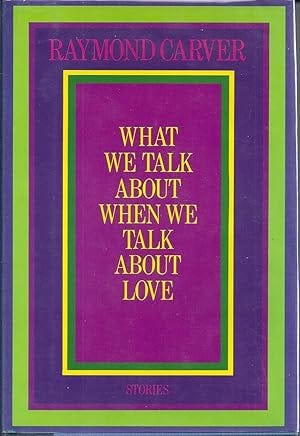
What We Talk About When We Talk About Love [stories], Raymond Carver10
Ellis Island and Other Stories [stories], Mark Helprin11
In the Garden of North American Martyrs [stories], Tobias Wolff12
My List: Novels
Good Behavior, Molly Keane13
The Hotel New Hampshire, John Irving14
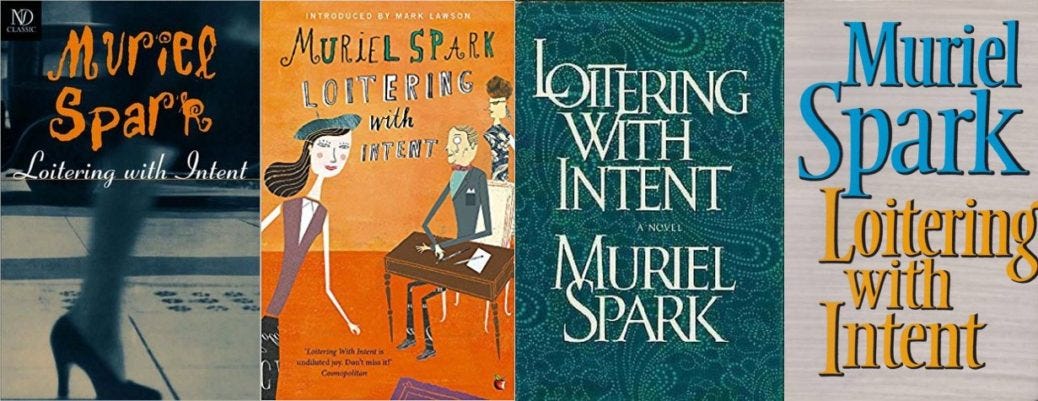
Loitering with Intent, Muriel Spark
In Shelley’s Leg, Sara Vogan15
Red Dragon: Harris’s second novel. The debut of Hannibal Lector, precursor to The Silence of the Lambs (1988). Not the kind of stuff I read . . . except in this case I was at a writing conference in Joseph, Oregon, and stayed up most of one night reading it. So naturally I had to read The Silence of the Lambs.
James Ellroy: “. . . the best pure thriller I’ve ever read.”
Stephen King: “ . . . probably the best popular novel to be published in America since The Godfather.”
Theroux: Has written a slew of novels, but is more widely known as a top-tier travel writer/essayist . . . among many other titles:
Dark Star Safari (2002)
Riding the Iron Rooster: By Train Through China (1988)
The Old Patagonian Express (1979)
The Great Railway Bazaar (1975)
The Mosquito Coast: Story of brilliant eccentric who relocates his family from New England to the jungles of Central America. A twisted Swiss Family Robinson, told by the fourteen-year-old son.
Side note: For many years Theroux was an acolyte/friend of of writer V. S. Naipaul, but in the mid-1990s they had a bitter falling out—or better to say Naipaul suddenly froze him out. Theroux detailed this interaction in Sir Vidia’s Shadow (1998). Fifteen years later, as the Independent put it (below), they buried the hatchet.
https://www.the-independent.com/arts-entertainment/books/news/celebrated-literary-feud-ends-after-naipaul-and-theroux-bury-the-hatchet-2290775.html
Theroux has led a complex, global life. Read about him:
https://en.wikipedia.org/wiki/Paul_Theroux
Rabbit Is Rich: Book Three of the Rabbit Quartet. The third-person narration is a terrific example of how you can make third-person sound like first-person—the narrative voice takes on the sound of the principal character’s inner sound/cadence. By this book, Rabbit, the one-time high school basketball star has drifted into middle age and runs a successful car dealership. The novel begins with a long riff in which Rabbit stands in the dealerships’s front window watching the traffic, musing on the state of life in the 1970s. Every time the Rabbit books come up, my wife alludes to that opening passage. A time capsule of the late 70s middle-class male consciousness.
The other books are: Rabbit, Run (1960), Rabbit Redux (1971), and Rabbit at Rest (1990). He added a coda in 2001, Rabbit Remembered.
Updike was a superb craftsman—his sentences are meticulous. He wrote too many novels IMHO—indeed, he published at least one book a year for his entire adult life (including poetry, sports writing, memoir, and art criticism). The novels are always finely constructed, but I wish someone had talked him out of several at the idea stage.
Last year, I read a hit piece on Updike by a young American woman novelist and felt very sad, as Updike was one of my heroes in the matter of sentence craft. Did he represent an outmoded model of sexuality? I’m gonna stay out of that. Everyone falls out of favor, everyone is taken to task for not having the same values/modes of behavior endorsed by the the enlightened writers/readers of the following generations. I’d really hate seeing this brilliant writer reduced to a Dead Old Sexist White Guy.
Final note: A number of his short stories regularly appear in anthologies and textbooks—”A & P, “Pigeon Feathers,” “The Family Meadow,” and some of the Maples stories. But I like the tone of the later stories. Here are some I love:
“The Sandstone Farmhouse”
“Poker Night”
“Deaths of Distant Friends”
“Leaf Season”
“My Father’s Tears”
“The Afterlife”
Here’s a link to the Library of America’s collection his late stories:
https://www.loa.org/books/390-collected-later-stories/
A Flag for Sunrise: Stone was a serious literary writer, a frequent finalist for major literary awards. My first encounter with Stone was his second novel Dog Soldiers (1974)—co-winner of National Book Award. Wiki’s notes begin:
Dog Soldiers deals with the fall of the counterculture in America, the rise of mass cynicism and the end of the optimism of the 1960s.
A Flag for Sunrise was a finalist for the Pulitzer.
Garcia Marquez: Winner of 1982 Nobel Prize in Literature. Two other major works, One Hundred Years of Solitude (1967) and Love in the Time of Cholera (1985).
https://en.wikipedia.org/wiki/Chronicle_of_a_Death_Foretold
Thomas: I’ve never read this, but looking at the citation I thought maybe I should have a look. Short-listed for the Booker, winner of other prizes.
https://en.wikipedia.org/wiki/The_White_Hotel
McEwan: His second novel. He went on to become a major British writer—prolific, many awards. The one I know best is On Chesil Beach (2007), the story of a disastrous wedding night and its fallout. Also known for Atonement (2001). Some of the novels are touched by the macabre or fantastic, but he’s a major literary writer, who doesn’t stay in the same groove book to book.
Wharton: Pen name of American writer, Albert William Du Aime. His second novel, after the highly successful Birdy (1978). Birdy, Dad, and several other novels became films with the likes of Ethan Hawke and Jack Lemon. Dad is considered highly autobiographical.
Donald Barthelme: A category of one. I could describe his stories but you still wouldn’t get what they’re like—meta, skewed way off to one side, droll, cerebral, funny-though-you’re-not-sure-why . . . Not to everyone’s taste—but what is? Brothers Steven and Frederick are also writers.
https://en.wikipedia.org/wiki/Donald_Barthelme
Raymond Carver: This was the book that did it for me (and a thousand other short story writers), though editor Gordon Lish’s influence and the stripping-down of Carver’s voice continues to be a discussion point. [Read the two versions of “A Small, Good Thing.”] Also note that the stories he wrote late in life are much fuller.
He died at fifty, depriving us of what would’ve come next. Here’s his poem, ”Gravy”—published by The New Yorker a week after his death:
No other word will do. For that’s what it was. Gravy.
Gravy these past ten years.
Alive, sober, working, loving and
being loved by a good woman. Eleven years
ago he was told he had six months to live
at the rate he was going. And he was going
nowhere but down. So he changed his ways
somehow. He quit drinking! And the rest?
After that it was all gravy, every minute
of it, up to and including when he was told about,
well, some things that were breaking down and
building up inside his head. “Don’t weep for me,”
he said to his friends. “I’m a lucky man.
I’ve had ten years longer than I or anyone
expected. Pure gravy. And don’t forget it.”
For a time, young writers tried to write like Carver, to do his aesthetic, his sound, his slice of the socio-economic pie. The trouble with that is you only copy what’s on the surface, not the thing itself. There was only one Carver—his work grew out of his life. Even the simplest Carver stories are unique, saturated with heart. Trying to sync up with the prevailing (or about-to-be-prevailing) zeitgeist it understandable, and sometimes proves liberating, but IMHO it’s better to emulate the writer’s example—the discipline or daring or persistence or whatever qualities have led to getting the work done and done well—than to copy what another writer’s work looks like.
https://en.wikipedia.org/wiki/Raymond_Carver
Helprin: I still have my beat-up old hardcover of this one. Helprin was a strange figure, an American who served in the Israeli Air Force, writer of Winter’s Tale and other novels. This collection has one of my favorite stories, “A Vermont Tale,”—meticulous prose, great management of tone.
Tobias Wolff: Novelist, story writer, nonfiction writer, professor. Both he and his brother wrote nonfiction books about their father: The Duke of Deception: Memories of My Father (Geoffrey, 1979) and This Boy’s Life (Toby, 1989). Wolff is among the story writers who helped re-energize the short story form within the Ray Carver/Ann Beattie/Lorrie Moore era. His 1996 collection, The Night in Question, has two stories I love: “The Other Miller” (contains a world-class reveal), and “Bullet in the Brain”—a perfect story, of the sort you write once or twice in a lifetime. Short story writers revere it.
https://en.wikipedia.org/wiki/Tobias_Wolff
Molly Keane: Here’s the note from an earlier post:
. . . just read this one and it’s pretty delicious. The title is like a faceted stone—depends on which direction the light’s coming from. Note: Don’t let the fact that the narrator may have murdered her mother in the opening pages stand in your way, OK?
Keane was Irish. Her real name was Mary Nesta Skrine, but published her novels and plays under the name M. J. Farrell. She married Bobby Keane in 1938, and they had two daughters. Then, in 1946, the husband died suddenly, her most recent play flopped, and she published nothing for the next twenty years. Only then came Good Behaviour, the first work to appear under her own name.
Hotel New Hampshire: After The World According to Garp (1978), I read everything Irving wrote for a while, but fell away eventually. I never considered this book in the top group along with Garp, The Cider House Rules, A Prayer for Owen Meany, and several others. I think he fell out of fashion, especially with younger female readers. Nonetheless, he’s among the major writers of his generation. The Hotel New Hampshire has its fans. Everyone should read a novel of Irving’s.
Vogan: A friend from Missoula days. This one’s about a women’s softball team and a bar named for the owner’s missing leg. Sara also wrote many good short stories—we both had collections in the Illinois Short Fiction Series—hers was Scenes from the Homefront (1987).
Again, only three.
Birth year: 1956 Is there a link to what’s already been written?