


You supply your birth year, I respond with an overview of what was published that year—the popular/well-known titles first, then some books I’d recommend. If your year’s already been done, I’ll do an update. To date, we’ve done 27 years—between 1939 and 1992 (age range: 33 to 86).
The current census: 1992 // 1980, 1981, 1984, 1986, 1989 // 1971, 1978 // 1960, 1961, 1963, 1964, 1965, 1966, 1969 // 1950, 1952, 1954, 1955, 1956, 1958, 1959 // 1944, 1945, 1946, 1948 // 1939
Extra credit: You read one of the books (ideally one you’re unfamiliar with), then tell me what you thought. If we get enough of these, I’ll aggregate and post.
Someone finally requested 1948 for the Birth Year Project!
Me.
At the annual meeting of American Booksellers Association Random House co-founder, Bennett Cerf said there’d been “only three novels published since the first of the year that were worth reading: The Naked and the Dead; Cry, The Beloved Country; The Ides of March.
Wiki lists roughly 120 works of adult fiction published in 1948 (many others routinely escape their notice). I’m highlighting about 30—as usual, I’ve skipped most of the crime/detective/thriller/historical-romance/straight sci-fi titles (unless otherwise noteworthy). Also, as usual, I found books I don’t know by well-known or semi-well-known writers—Taylor Caldwell, A. J. Cronin, Howard Fast, L. P. Hartley, Aldous Huxley, Thomas Mann, Somerset Maugham, others.
As always, I hope you spend some time with today’s list, and end up reading one or more of the books. I’ve asterisked [*] ones I’ve read.
The 1948 Nobel Prize for Literature was given to T. S. Eliot.
About the Pulitzer Prize for Fiction: The 1948 Prize was for a 1947 book [James A. Michener’s Tales of the South Pacific]. The 1949 Prize winner, published in 1948, was James Gould Cozzens’, Guard of Honor [see below].
[Wiki also lists 1948’s notable literary births. Due to an egregious oversight, mine was omitted—it would fall between 4 March (James Ellroy) and 17 March (William Gibson). However, here’s a fun fact: I was born in Philips House/Massachusetts General Hospital, overlooking the Charles River. Six days later, in the same spot, James Taylor was born.]
***Important Update About Footnotes:
Books with only a Wiki page are now hyperlinked in the list. I’ll footnote only those with further references/links/razor-sharp wry comments the flight deck. I’ll repeat this note in future notes for a while.
1948
Best Sellers/Best-Known Novels:
Guard of Honor, James Gould Cozzens
Raintree County, Ross Lockridge Jr.
*The Naked and the Dead, Norman Mailer1
The Young Lions, Irwin Shaw
The Ides of March, Thornton Wilder2

Sample of World Literature:
Ashes and Diamonds, Jerzy Andrzejewski [Poland]
No Longer Human, Osamu Dazai [Japan]
Snow Country, Yasunari Kawabata3 [Japan]
The Atom Station, Halldór Laxness4 [Iceland]
Cry, the Beloved Country, Alan Paton [South Africa]
Others works:
Other Voices, Other Rooms, Truman Capote
*Intruder in the Dust, William Faulkner
Concluding, Henry Green
*“The Lottery” (short story), Shirley Jackson
Walden Two, B. F. Skinner
The City and the Pillar, Gore Vidal
The Loved One, Evelyn Waugh
The Living is Easy, Dorothy West5
Four more-obscure novels worth checking out:
From the City, From the Plough, Alexander Baron6
Tarry Flynn, Patrick Kavanagh
Last of the Conquerors, William Gardner Smith
My List:
*The Heart of the Matter, Graham Greene
*The Naked and the Dead, Norman Mailer
*Time Will Darken It, William Maxwell8
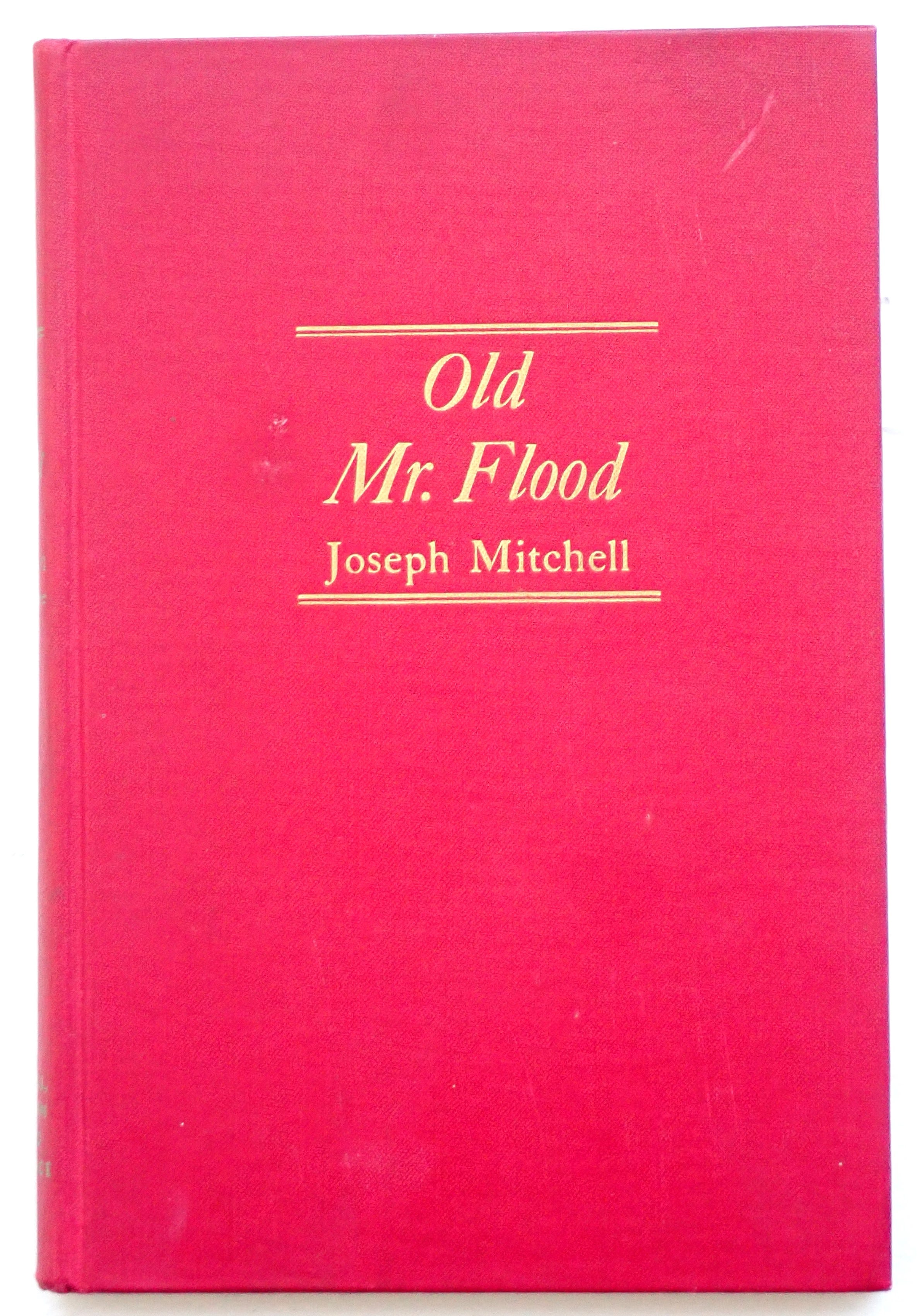
*Old Mr. Flood [nonfiction], Joseph Mitchell9
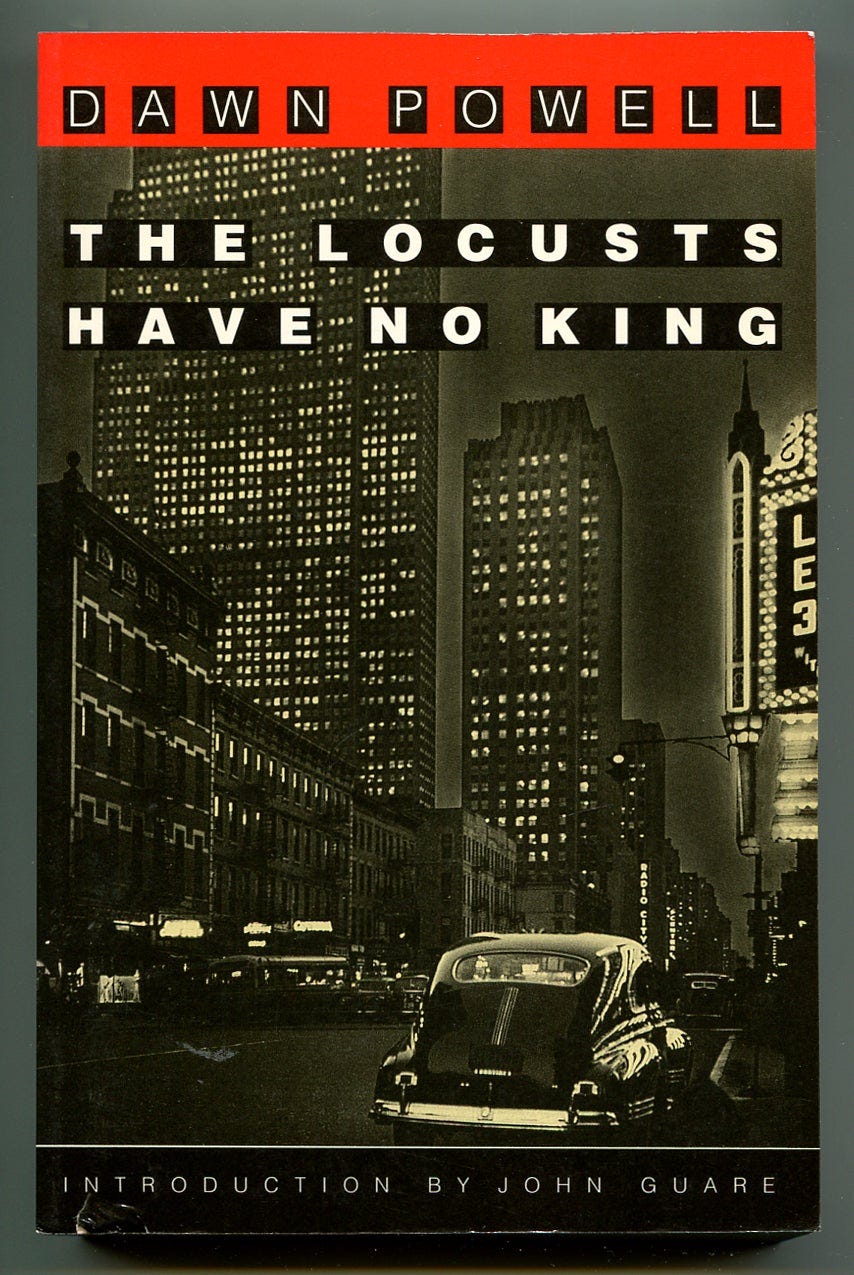
*The Locusts Have No King, Dawn Powell10
The Naked and the Dead: I noted this novel in an earlier BYP post about WWII novels written by soldier-participants. Mailer’s was the first, followed by The Young Lions. then in 1951 by James Jones’s From Here to Eternity and Herman Wouk’s The Caine Mutiny. Mailer’s story concerns American soldiers taking a mountainous, densely jungled island in the Philippines. As the novel progresses it gradually becomes a tale of futility, misjudgment, and pointless sacrifice.
The Naked and the Dead spent 62 weeks on the New York Times bestseller list.
The publisher wouldn’t let Mailer use the word “fuck” so he changed them all to “fug.” Actress Tallulah Bankhead reportedly once said to Mailer, “Oh, hello, you’re . . . the young man that doesn’t know how to spell.”
The underground rock band, the Fugs, took their name from Mailer’s novel.
The Ides of March: An epistolary novel depicting the last days of the Roman Republic, leading up to Julius Caesar’s assassination in 44 BCE.
[If you’d like an excellent history of this period, see Tom Holland’s, Rubicon: The Last Years of the Roman Republic (2003).]
Writing this post, I’ve gotten a new sense of Wilder’s range—we tend to forget he wrote anything beyond Our Town, and tend to write that off as over-sentimental (a mistake). It won one of Wilder’s three Pulitzers; the others are the novel, The Bridge of San Luis Rey (1927), and the play, The Skin of Our Teeth (1942).
This week I’m reading his 1967 novel, The Eighth Day (winner of the National Book Award).
Snow Country: A classic of Japanese lit. Appeared serially in literary journals between 1935 and 1937; first complete Japanese version published 1948; English translation in 1956. Set in a remote mountain hot spring, the affair between a wealthy Tokyo dilettante and a geisha.
Other major works:
Thousand Cranes (1952)
The Master of Go (1954)
The Sound of the Mountain (1954)
Beauty and Sadness (1965)
Kawabata was awarded the 1968 Nobel Prize for Literature.
Laxness: I’ve mentioned Laxness in earlier posts. Here’s the note about Independent People from Reading Projects [1]: The 1930s:
Winner of 1955 Nobel Prize in Literature, from Iceland. This novel is considered the centerpiece of this career. I read it years ago based on the rave intro by Brad Leithauser, and to be candid here, found it a bit of a slog. But many revere this book. Ten years ago, I walked through Laxness’s residence outside Reykjavik—kept much as it was, books and all, and felt it a great honor.
Recently I read another, Under the Glacier [intro by Susan Sontag], much shorter and stranger and a hell of a lot funnier. From a Salon review: If there were any justice in the literary world . . . this amazing little volume would inspire a cult following . . . Under the Glacier is hilarious . . . A luminous tale of timeless mythic profundity.
Archipelago has just issued a new translation of Salka Valka [1931-32], which I mean to read this summer. Archipelago books are such handsome artifacts—you just want to hold them! Alice Munro: Laxness is a beacon in twentieth century literature, a writer of splendid originality, wit, and feeling.
Dorothy West: A member of the writing community/movement known as The Harlem Renaissance.
See Reading Projects [13]: The Harlem Renaissance and Beyond.
Alexander Baron: From the City, From the Plough is a WWII story. I’m recommending Baron because I’m interested in his 1963 novel, The Low Life. From Wiki: “set in Hackney, a riotous, off-beat novel about gamblers, prostitutes and lay-abouts of London’s East End.” Reissued by Faber & Faber in May 2025.
Jon Godden: Rumer Godden’s sister. Check out her Wiki (in list).
William Maxwell: One day in the mid-1990s, I was at an awards gathering in NYC, and made my way up to Maxwell, a dapper older gentleman, one-time Midwesterner, who’d spent his life writing and editing fiction at The New Yorker. He’d been one of my heroes since I’d happened on his short 1980 novel, So Long, See You Tomorrow (one of my top-five favorites of all time). I attempted to express my appreciation, but found myself babbling. He quietly explained I was doing fine.
This book was published thirty-two years earlier, but has the same quality of poignancy and unfussy precision of language. In 1992 he published Billie Dyer and Other Stories, which I also wholeheartedly recommend—these stories are now in All the Days and Nights: The Collected Stories.
Really you should read William Maxwell.
Old Mr. Flood: Not to be confused with Edgar Robinson’s poem, “Mr. Flood’s Party” [or, for that matter the band Mr. Flood’s Party or Jess Kidd’s novel, Mr. Flood’s Last Resort or the bar in Ann Arbor.
I have the jacketless first edition my parents’ friends gave them; it’s a kind of sacred artifact if mine (along with an oil painting by Hildegard Rath from 1952, Fulton Fish Market in foreground, Brooklyn Bridge in back—the fish market being the connection). It’s a skinny book, three pieces about Hugh G. Flood, retired house-wrecker living on a diet of fresh seafood. Joseph Mitchell was a quintessential New Yorker writer—known among other things for his world-class writer’s block. Late in life a collection, Up in the Old Hotel, won him new fans (it includes OMF).
At some point, later on, there was a flap over Mitchell calling the book “journalism”—he revealed the fact that Mr. Flood was a composite character based on “several old men who work or hang out in Fulton Fish Market.” He wanted the pieces, he said,”to be truthful rather than factual, but they are solidly based on facts.”
This book delights me for a bunch of reasons, not least because of the quality of the prose. I hope you read it; I hope it delights you, too—if it doesn’t please keep that to yourself. Deal?
Dawn Powell: A major mid-century novelist/playwright—prolific, sharply satiric, smart. Read her Wiki (below)
She should not have fallen out of public awareness. The Library of America has recently brought out a two-volume compendium of her novels, including Turn, Magic Wheel (1936), A Time To Be Born (1942) The Wicked Pavilion (1954), The Golden Spur (1962), and others.
Nay, thank YOU! And I would also add that I am a great admirer of Daughters as well as The Inhabited World.
I am an honest person at heart, and confess my sins as follows...These are the only books I've read or know anything about from this, my Birth Year List:
Now Country
Cry, the Beloved Country *
The Loved One *
Old Mr Flood **
Raintree County ***
* Assigned in High School
** Read because of Dave's recommendation
***Saw the movie (Montgomery Clift & Elizabeth Taylor)
See, my ignorance of literature is now proclaimed to the world. (Sorry about that, world).
Further confession: The only book I read, unprompted and not as part of an English Lit assignment, was "Snow Country" by Kawabata Yasunari (translated by Edward Seidensticker). I was taking an undergraduate study abroad year in Japan at the time (1968) and there was great excitement at his Nobel award. I recall Kawabata being interviewed on NHK, the national TV broadcast network, when he said the award should be shared with Seidensticker because had it not been so well translated, no one outside of Japan would ever have been able to read his novel. Even then it is not to everyone's taste.
I have to say, in regards to that book, that despite my interest in all things Japanese, it did not resonate with me as a 20 year old. It just seemed rather quaintly "Japanese-y", as its central characters were a aging upper middle class gent and a his lover, a rather loveless "affair" (more an arrangement of mutual convenience for both than a passion for either, imho) with a country geisha in a town on the western, snowy Japan Sea side of Japan's main island (Honshu).
Now that I count myself among the ancients, it all makes much more sense. After all, we get to a certain age and recognize the wisdom of the saying, "Vanity, all is vanity", wherein the vain conceit is that anything in this world could last forever. The things we cherish will not/can not last forever, they will in time be just memories -- though no less wonderful for all that -- so it is vain and pointless to pretend they will withstand the test of time.