

2026 (so far):
The first four months in reading

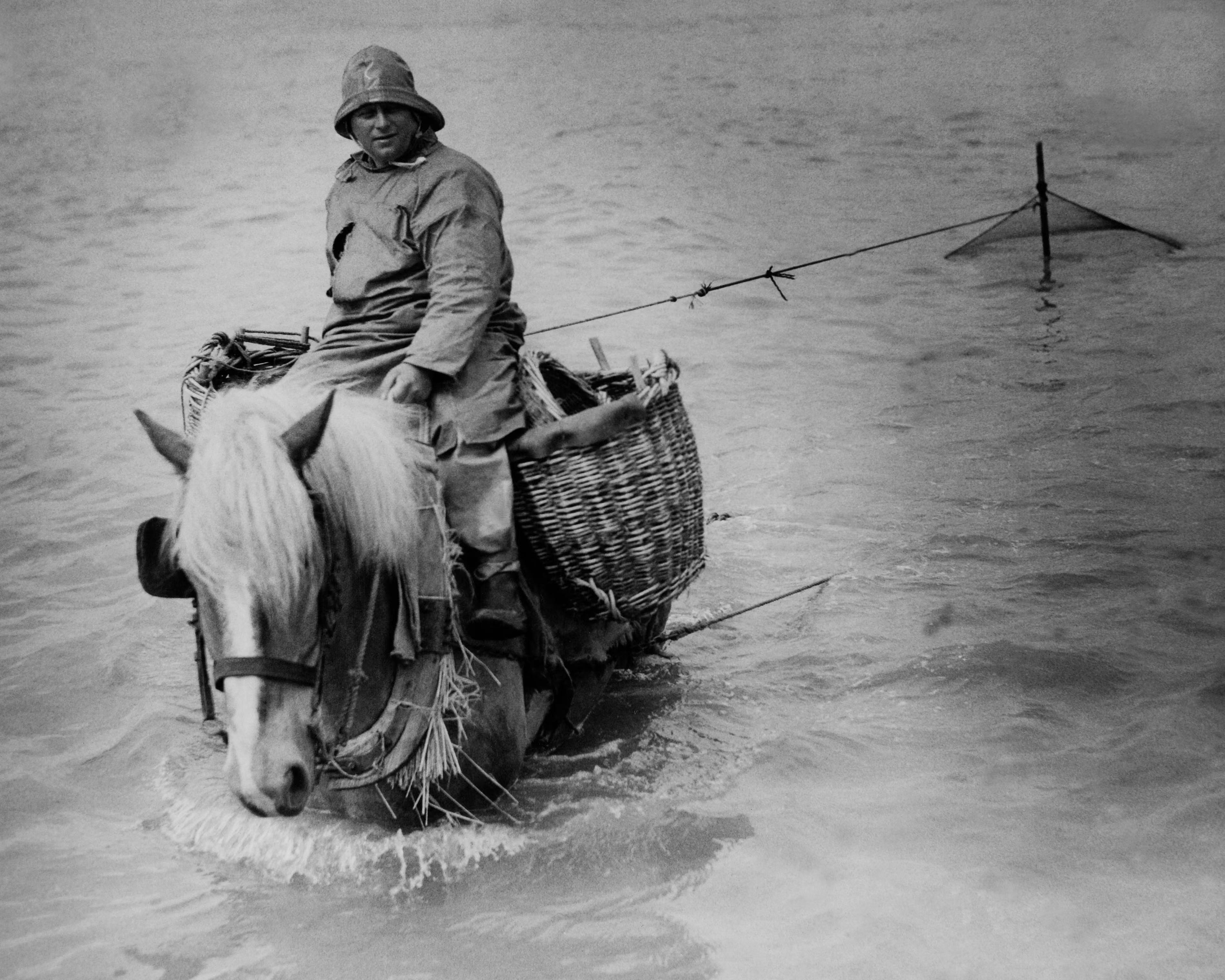
[Keystone-France/Gamma-Keystone/Getty Images]
Whoever you are, you’re my community. Talking to you about books every two weeks makes me feel useful, outward-looking, engaged. David’s Lists 2.0 is free—you pay me with your attention.
ay, there’s the rub . . .
Too often I feel like I’m beaming messages into deep space.
Substack is obsessively stat-conscious, so I know how many subscribers/followers we have, and how many open a given post, which turns out to be about 44%—a fellow Substacker told me this is about the norm. And I get it—I don’t open some of the Substacks I subscribe to either. Not in the mood, don’t have the time, etc. This is one reason I’m very selective in what I follow.
But when I feel like responding, I do. The other day, Heidi Pitlor wrote an important post about AI and voice; I told her it was brilliant. Then I left a chunky comment on what she’d said. Why? Because (aside from being a late-septuagenarian gasbag) I see Substack as my third-space, a place to converse with people of my tribe (and other tribes).
[More on stats.1 I (double dog) dare you to click on it.]
“I promise not to waste your time.”
1.
Five Best Reads of 2026 (so far):
Crux, Gabriel Tallent (2026)
Seascraper, Benjamin Wood (2025)
Paradise Bronx [nonfiction], Ian Frazier (2024)3
I Who Have Never Known Men, Jacqueline Harpman (1995) [Trans. from French by Ros Schwartz, 1997]
About those five:
More then half the books I’ve logged this year have been speculative, but I Who Have Never Known Men is the only example on this first list. I’ll say a little more about it in another one below.
Seascraper is a quick, quite satisfying read. I like how the Guardian’s review begins:
You don’t think you need a novella about a folk-singing shrimp fisher living with his mother on a fictional stretch of isolated coast until you read Benjamin Wood’s Booker-longlisted fifth novel, Seascraper . . .
Its hero, Thomas Flett, is a shanker—at low tide, he and his horse ply the trade inherited from his grandfather, seining shrimp along the shoreline. As he con-templates his future, wondering whether he’ll stay in his village or try the greater world, and whether he’ll have enough gumption to perform at a local open-mic, the proverbial stranger rides into town. I’m calling this story realism though there’s an interlude deftly woven into it that strays (I won’t spoil it for you).
Brawler: I linked you to earlier comments on Groff in the notes. I read the first story in this collection, “The Wind,” in The New Yorker and immediately wrote her a fan letter. Only then did I start in on her novels. Brawler is really solid collection—precise, humane, acutely tuned into the evidence of human dilemmas, a book with no “filler stories.”
Crux is Gabriel Tallent’s second novel. I started reading for two reasons: a) My older boy had a copy of the first one, My Absolute Darling (2017)—Pamela Miller of the Minneapolis Star Tribune said, “Reading this book is like watching an electrical storm.” For a couple of days nobody could find me. And b) I read the opening pages online and the voicey dialog snagged me—I knew I wanted to spend time with these two teenage outsiders bonded (platonically) by their passion for rock-climbing. A few reviewers gripe about its moments of melodrama. I won’t argue with them, only say that when a book has you, your receptors for emotion light up in a way that back-burners your analytical mind. A more cerebral writer might have shied away from the high drama toward the novel‘s end, to which I say: OK, fine, I like sophisticated, idea-rich novels, but this isn’t one of those. Tallent’s a writer—like Atticus Lish or Ottessa Moshfegh—whose first two novels inclined me to read whatever else they write. [One other thought about Crux.4]
Paradise Bronx: Ian Frazier (known as Sandy) is a foremost writer of book-length nonfiction, the kind fostered by generations of New Yorker writers, from E.B. White, Berton Rouché, Joseph Mitchell, and John McPhee to Susan Orlean, Rachel Aviv, Adam Gopnik, Elizabeth Kolbert, Kathryn Schulz, and so many others. Casual but precise, suffused with detail you didn’t realize was important until you read it, fastidiously fact-checked, and fun to read. Like Great Plains (1989) and Travels in Siberia (2010), the Bronx book is both participatory and deeply place-centric. He walks us through the borough’s 42 sq. mi. of terrain (including non-spaces nobody else would bother with) with acute attention to its layers of time. He stands on a spot and refreshes our memory of the history he laid out earlier—before it was this, it was this, and this . . . He makes information visceral. I get the same frisson as when on Time Team (my favorite archaeology show), they peel back a metre of English hayfield and there’s a Roman mosaic. But the topmost layers of history aren’t shirked, either—he makes a detailed case for the Bronx being the birthplace of hip hop. And so on. Sandy is always a great companion.
2.
Plague-Lit:
. . . is nothing new. Besides Boccaccio’s, The Decameron (c. 1353), Defoe’s, A Journal of the Plague Year (1722), and Camus’s homage to it, The Plague (1947), AI happily supplies a few others.5
These days, there’s an onslaught of dystopian/post-apocalyptic fiction, and whereas the “end-times” scenarios in classic, mid-century sci-fi were typically the result of nuclear devastation (or, occasionally, overpopulation6), now the cause is, overwhelm-ingly, climate change—drowned cities, food-chain collapse, displaced populations, unstoppable epidemics, etc.—leading to the gusher of cli-fi titles, the subject of my last post (which updated an earlier one). Between them you’ll find about fifty novels.
If I were less graphically challenged I’d draw you a Venn diagram of how post-apoc fiction overlaps with cli-fi and plague-lit. They’re at least first cousins. Stories about inexorably rising seas have in common their central fact/image, sea-rise. What’s remarkable is how many unique iterations of this we have. Stories about epidemics have the same intrinsic problem—how to do it freshly.7
I haven’t taken a deep enough dive into “new kinds of plague”—I’m sure it’s a burgeoning category—but here are two I read this year:
Pink Slime, Fernanda Trías (2020) [Trans. from Spanish by Heather Cleary, 2024]
Wanderers, Chuck Wendig (2019)
Trías is Uruguayan. Read the publisher’s page about Pink Slime and you’ll get a good sense of the book. The plague is environmental, and therefore the novel is kin to other cli-fi/epidemic stories, yet there’s an existential undertone throughout that feels new.
The plague in Wanderers is a trance-like state that afflicts certain individuals, including the sister of a main character. They start walking, joining others in an undivertable stream. They don’t eat, don’t talk, don’t sleep. Question: where are they going (and why)?
NPR’s reviewer concludes his commentary:
This story is uncomfortable to read, but also a timely novel that demands a place in the spotlight. Wendig takes science, politics, horror, and science fiction and blended them into an outstanding story about the human spirit in times of turmoil, claiming a spot on the list of must-read apocalyptic novels while doing so.
Five Plague Lit Lists:
3.
Last Woman on Earth:
I Who Have Never Known Men, Jacqueline Harpman (1995) [Trans. from French by Ros Schwartz, 1997]8
Wittgenstein’s Mistress, David Markson (1988)9
The Wall, Marlen Haushofer (1963) [Trans. from German by Shaun Whiteside, 1990]
Not sure if this qualifies as a new room in post-apocalyptica’s mansion, but these three books belong together. Harpman’s novel has gotten a lot of ink since Transit Books brought out a new edition in 2022, which is heartening to see. Click on the link and you’ll find a brief synopsis.
The Wall . . . read the note about I Who Have Never Known Men (#8) then come back here. The Wall’s character is older as the book begins, about forty, and not in the dire situation as Harpman’s narrator—she’s on a weekend getaway with her husband in the Austrian mountains. But overnight she finds herself alone, on one side of an impenetrable-but-invisible barrier. Like Harpman’s narrator, she must find a way to keep living—physically and psychologically—without receiving any explanation for what’s befallen her. And like I Who Have Never Known Men, The Wall doesn’t stop with this collision between not-knowing and wanting to remain alive, the way it might if it were a short story, but the scenario is allowed to play out over years.
Here’s what (Nobel Prize winner) Doris Lessing has said about The Wall:
The Wall is a wonderful novel. It is not often that you can say only a woman could have written this book, but women in particular will understand the heroine’s loving devotion to the details of making a keeping life, every day felt as a victory against everything that would like to undermine and destroy. It is as absorbing as Robinson Crusoe. [Wiki]
4.
Two Novels I’m Reading Now (and will talk about in a future post):
What We Can Know, Ian McEwan (2025).
A few posts ago, we looked at Rachel Kadish’s, The Weight of Ink [Novels About Old Books]. McEwan’s novel is a mash-up of that plot—manuscript/two time frames—and a cli-fi/post-apocalyptic world plot. McEwan is one of our major, much-decorated novelists; he’s published some lesser novels along the way but What We Can Know isn’t one of them.10
On the Calculation of Volume (Book I), Solvej Balle (2020) [Trans. from Danish by Barbara J. Haveland, 2024].
The first of a projected seven-volume series; shortlisted for 2025 International Booker. Like Groundhog Day—woman relives a day, November 18th, over and over and over—except here it’s not played for laughs (no waking to Sonny & Cher). Balle is getting raves for this project; I’m eager to get into Book II.
5.
Birth Year Project:
Reminder that the Birth Year Project is still open for business:
You supply your birth year, I respond with an overview of what was published that year—the popular/well-known titles first, then some books I’d recommend. If your year’s already been done, I’ll do an update. So far, we’ve picked off 29 years—between 1939 and 1992 (age range: 33 to 86).
The current census of years done: 1992 // 1989, 1986, 1984, 1981, 1980 // 1978, 1973, 1971 // 1969, 1966, 1965, 1964, 1963, 1961, 1960 // 1959, 1958, 1956, 1955, 1954, 1952, 1951, 1950 // 1948, 1946, 1945, 1944 // 1939
Extra credit: You read one of the books (ideally one you’re unfamiliar with), then tell me what you thought. If we get enough of these, I’ll aggregate and post.
That’s it for today. Good reading to you. See you again in two weeks.
Stats:
“Open rate” for Cli-Fi [2] was 43.83%.
There were 44 links in the post:
7% of openers clicked a link/individual links clicked by 1% of openers
Comment rate: half of 1%
“Like” rate: 2%
Questions:
Is it that giving concentrated attention to anything is too hard these days?
Is it that you’re reading this on your phone and your phone’s only good for bite-sized things?
Is it that the cornucopic nature of the delivery system makes us too impatient to follow-up anything—for instance, links in a post?
Is it that my concept—that we’re having a conversation about books—simply erroneous?
Am I simply dinosauric?
Groff: A couple notes on her from earlier posts, here (note 1) and here (note 13).
A common pattern: writer starts out writing short stories, publisher agrees to publish collection if writer follows it with a novel, after which writer continues writing novels and stops being a short story writer (or, alternatively, finds novel-writing torturous and goes back to writing stories). Lauren Groff has become both a major American novelist and a first-tier short story writer.
Frazier: Last summer I read and loved his equally chunky, discursive history of own kin, Family (1994).
I’ll add, what many of you already know, that Sandy has a second hat he puts on, the funny guy hat—he does “Shouts & Murmurs: pieces for the New Yorker every so often. One collection of these is Coyote v. Acme (1996)—the title piece being . . . well, you can guess. He also inherited Roger Angell’s role as composer of the annual name-naming Holiday Letter, doggerel raised to fine art.
Crux: Remember in school where they told you to avoid jargon? When I got to be a grown-up writer I realized they meant you shouldn’t conceal ideas behind technical smokescreens/euphemisms/etc., or demand a reader’s respect by showing off your insider-ness, or simply baffle people by using terms that they don’t know. In my note on Ian Frazier I mention New Yorker nonfiction—proffering undigested jargon is one thing New Yorker writer specifically do not do.
However: I eventually realized that jargon’s a great tool when managed correctly. What do I mean? Jargon is insider language. People at the heart of an enterprise talk about it in a certain way. Sometimes your characters operate within areas of expertise your readers don’t already know about—this often happens when writing about work, workplaces, science, specialized hobbies or sports and the like. Authenticity requires the specialized language. Some degree of reader bafflement is OK if it makes people believe you know what you’re talking about. Readers don’t need every single term explained; sometimes it’s enough to know that the characters know what’s what. [This is why I never mind snatches of untranslated foreign language in a text, as in Hemingway or Cormac McCarthy.] Anyway, the kind of rock-climbing done in Tallent‘s novel is rife with slang/jargon—much of it in dialog. I didn’t get all of it, but it helped cement my confidence in the story.
A few others:
Arthur Mervyn, Charles Brockden Brown (1799)—follows a young man in Philadelphia during a yellow fever epidemic.
The Last Man, Mary Shelley (1826)—pioneering apocalyptic novel about a future plague destroying humanity.
The Masque of the Red Death, Edgar Allan Poe (1842)—gothic short story regarding a plague in a secluded kingdom.
The Scarlet Plague, Jack London (1912)—post-apocalyptic story about a disease wiping out civilization.
Overpopulation: John Brunner’s Stand On Zanzibar (1968) and John Hershey’s, My Petition for More Space (1974) for starters. Then go here.
. . . freshly: Sometimes this quest takes you into meta territory. For instance, The Raw Shark Texts [Steven Hall, 2007], is a next-generation guy-on-the-lam story, in which our hero is being chased by “information sharks” and must hide in the spaces between things.
Harpman: Had a convo with my older son last night, re: this book vis-à-vis another speculative novel, In Ascension, Martin MacInnes (2023). He was saying (and I agreed) that he liked MacInnes’s story but not how it ended—that is, leaving key elements unresolved/unexplained. Curiosity had fueled our reading, but we exited the book without it having been satisfied. Then I told him I was going to praise I Who Have Never Known Men for not explaining. The scenario that the narrator lives out in Hartman’s book is extreme (hit the link for a quick synopsis)—strange situation/strange environment. We watch her come to terms with it—but not understand it. In other words, not-knowing is the circumstance of the book, its armature, its state of being. I remember when I was first out of grad school teaching poetry to kids, and some grade-schooler would write this wild scrap of story, then feel compelled to end it with and then my mother woke me up for school. Disappointing but understandable. There’s no and then my mother woke me up for school in I Who Have Never Known Men. She endures without understanding, and so do we.
Markson: I’m a fan of a four-pack of sui generis books he wrote late in life, the so-called Notecard Quartet [more on that here, note 13]. Wittgenstein’s Mistress is a wholly different animal. It’s considered experimental. It’s on my shelf of WTF books (along with Ishiguro’s The Unconsoled (1995) and Anna Kavan’s, Ice (1967).
McEwan: My two favorites: Atonement (2001) and On Chesil Beach (2007).
I enjoyed this! The cli-fi genre overlaps with what was called the "new weird", a postmodern blend of eco-horror and a certain haunted mood.
Curious what you'll make of the McEwan - I was immersed the first half of the audiobook then lost interest.
I read Wittgenstein's Mistress way back in my early 20s and am still scratching my head over it! (LOL) Made it about 1/3 through The Wall before putting it on the "come back to" shelf because I found it so bleak. Some day, I may return. Wanderers is on my TBR list...